



Abby_OVO
Community Manager
Community Manager
January 10, 2022
SHARE YOUR EXPERIENCE

Heat pumps - What’s your experience of the benefits and downsides to an ASHP?
  • January 10, 2022
  • 106 replies
  • 5002 views
Heat pumps - What’s your experience of the benefits and downsides to an ASHP?

Updated on 03/07/26 by Abby_OVO


Advantages and Disadvantages of Air-Source Heat Pumps (ASHPs) - Share your experience


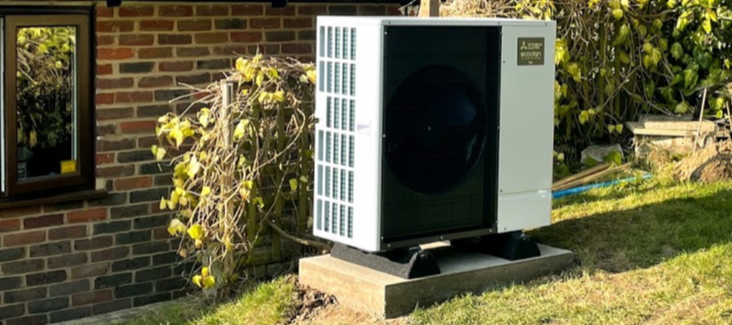
As one of the leading options in our journey to decarbonising the way we heat our homes, Air Source Heat Pumps (ASHPs) are really heating up (pun intended) and generating much discussion, both amongst the AHSP trialists here on the OVO community and in this recent article written by our content team covering both the advantages and disadvantages of this low carbon heating set-up.


We know a lot of you here have gained first-hand experience of life with an ASHP in 2021 and we want to give you another chance to share your stories and help others considering an ASHP installation in 2022 and beyond!


 As the article outlines one of the main benefits of opting for this heating system over alternatives will be it’s green credentials:


“They don’t give off any nasty carbon emissions”


How important was this as a factor in making you decide on an Air-Source Heat Pump and how do you think the positive environmental impact could be supported?  

@nealmurphy@M.isterW  - be honest here: did reducing your home’s carbon footprint play a factor in your choice to go for a heat pump? 


We know, as with any new technology, there might be some misconceptions about ASHPs which could be putting off other potential adopters. Have you heard the one about how noisy heat pumps are?:


“They can make noise – but not as much as you might think”


We’ve ‘heard’ that the noise of an ASHP hasn’t been the issue you might have been led to believe before getting one installed - isn’t that right, @James_N and  @jason.lewis? Can you dispell this myth once and for all?!

Was this a concern you had before the installation and if so what put your mind at ease when giving the go ahead to the install?

What would you say to others who might be concerned by the noise factor? Are there times that the pump might be louder than others or is it a constant hum? 


Cost is always a major factor when making home improvements and could be the deciding factor for some. As the guide calls out, currently installation costs for ASHPs are much higher than for a standard gas boiler replacement:


“They’re more expensive to install than a boiler”


Whilst I know many of you here are participating in a trial so didn’t incur these installation costs, there may be other financial impacts to consider such as the ongoing running costs. This can be complicated to work out, but is essential information. @Gingernut49 and @hambrook - What advice would you give to someone trying to calculate the affordability of an ASHP over other options?


For those considering an ASHP in future there’s some positive news ahead:


“You can get some financial support for installing one”


We’ve also seen a few community members with ASHPs who aren’t part of any trials that OVO are involved in, and we want to hear from you on this one! @Heatherd@plodder@Sean T@Graham110011@Roy_and_Becky and @PNorman - Did you get any financial support towards your installation or running costs? Any top tips for someone thinking of applying for this now? 


“You’ll need proper insulation to get the best out of your heat pump”


This is another big and complex factor to consider when changing from a gas boiler to an ASHP. Pipe insulation is one thing, loft insulation is another and the overall heat retention properties of a house can impact the cost effectiveness. @hydrosam and @Transparent @hambrook - How can someone work out whether their house is suitable for an ASHP or what changes might be needed first? Better to get an expert in, or reaching for the thermal sensors?


@juliamc  we know you have first hand experience of some DIY insulation post-install: looking back, any tips you can share on how to go about this, or would you now advise the installer takes a lead? 


And what about radiator sizes? -  @sylm_2000  we know you had changes made: Share your overall lessons for someone unclear on whether their radiators are fit for purpose in an ASHP home of the future!


Potential heat pump owners, over to you!


As it’s usually the largest contributing factor in the carbon impact of a household, making such a radical change to the way we do things (over 85% of UK homes are currently heated by gas) will no doubt generate plenty of questions. We’re hopeful that by having honest and constructive communities (like this one!) on hand to de-mystify the process, this will give others the confidence to take the leap -  @Jeffus and @Gum168, we know you’re both eco-minded but yet to invest in an ASHP- Has participating in discussions here altered your view of heat pumps or encouraged you to learn more?


What would be the number one thing you’d want to know before making the ASHP journey? 

106 replies

nealmurphy
Newcomer
Newcomer
January 14, 2022

So I'm hearing that an ASHP system is run differently compared to a gas system. Are there smart controls? Are there TRV's, smart or not. And what about when the house is empty, say everyone is at work? 

I am struggling to understand how keeping the heating on day and night can be efficient? Even with heavy duty insulation that doesn't make sense to me. I can't sleep at 21°c, that's very warm for a bedroom surely?

It will come down to size of the house and insulation as to what is the best set-up. There are differences of opinion as to whether it’s better to heat the whole house or just some rooms: https://www.uswitch.com/energy-saving/guides/heat-the-whole-house-or-one-room/

Remember that you will still lose heat from a hot room to an adjacent colder room through the internal walls in a similar way to losing heat through an external wall. The room by room heat calculations take account of the expected temperatures in each room and the adjacent rooms when sizing the system.

One of the best analogies of running a heat pump is thinking of it like a simmering pot of water on a low heat rather than boiling the water quickly using a lot of heat and then letting it cool again.

I have a higher temperature heat pump that can get to 65 degrees and so it is able to react quicker to any heating requests, but I’m finding that it works well if you set a constant temperature and let it simmer through the day, particularly in cold weather. Having said that, I still reduce the thermostat by a few degrees overnight and let the system warm up again for the next morning.

I was curious as to whether having the system on more overnight would make the bedrooms too hot, but this is not the case with my current set-up. If required, I think you could add a smart TRV to individual radiators in bedrooms to set different temperatures for those rooms for daytime/overnight.

M.isterW
Rank 6
Rank 6
January 14, 2022

To add an example to the comment above... we went away for a weekend and allowed the house temperature to drop to 13. I switched the heating back on at lunchtime on the day we returned. It used loads of electricity trying to get back to 20, which it didn't actually achieve before we went to bed. It would have cost us less to just leave the system on its normal setting while we were away.

Now we don't allow the house to drop below 17. During the day it's mostly at 19, rising to 20 in the evening.

1992 4 bed detached house. Solar PV + battery, Zappi EV charger, Mitsubishi Ecodan ASHP and i-life2 fan assisted radiators.... No gas 😊
Newcomer
January 14, 2022

To add an example to the comment above... we went away for a weekend and allowed the house temperature to drop to 13. I switched the heating back on at lunchtime on the day we returned. It used loads of electricity trying to get back to 20, which it didn't actually achieve before we went to bed. It would have cost us less to just leave the system on its normal setting while we were away.

Now we don't allow the house to drop below 17. During the day it's mostly at 19, rising to 20 in the evening.

I enjoy our dialogues and your 1992 house is clearly much better insulated than my 1972 house, despite mine being B rated on the EPC. On a morning where the temp dipped to -2 in the wee hours, here’s the read out from my Tado thermostat, supplied with the trial and located in our hall. BTW I find having only one place to measure the temperature useless. 

So I did run the system for 2.5 hours overnight to try and prevent the early dash for heat, it then kicked it at 6:30am to try and heat the house up before folks got up. In addition to this; I had the underfloor electric heating in the home office came on overnight, same in the bathroom, I lit the log burner at 7am as the lounge was reading 17 degrees, I have a plug in radiator in the large bedroom / dressing room as two Climaventa radiators can not heat that room to above 20 degrees. The system, for our usage, does not give out enough heat. 

House layout is key to specification as well. During the day maybe only my home office needs to be heated. Simple in the former Honeywell Evohomes system, just turn on one radiator using the smartphone app and the wifi TRV heated just one room, with Climaventa I would need to manually turn down or off 13 radiators to achieve the same result. . We have 14 radiators in this house and trying to heat all 2,000 square feet to 21 degrees 24 hours a day would cost circa £400 a month. In December we used 2673.8kWh of electric and that is with no EV charging that is just heating, eating and washing. 

It’s worth mentioning the subjective nature of these discussions; for some an 18 degree bedroom and 20 degree in rest of house is fine. For members of my house, anything under 22 degree is ‘baltic’. So if you have a household who likes to wander round in shorts and t-shirts a Heat Pump won't be for you unless you like 19-20 degrees OR unless you live a new built, well insulated house OR you have wet underfloor heating installed throughout the ground floor. 

I am now looking at replacing the majority of Climaventa radiators with oversized traditional radiators with wifi TRVs and possible wet underfloor in the kitchen / diner. 

Ecodan 14kw Heat Pump with 300L Joules Cylinder - 9 kWp Solar PV - 2x Tesla PowerWall 2 with Backup Gateway 2 - Tesla Model S 75D - MyEnergi Zappi & Eddi - Mixergy 250L
juliamc
Rank 20
Rank 20
January 14, 2022

So I'm hearing that an ASHP system is run differently compared to a gas system. Are there smart controls? Are there TRV's, smart or not. And what about when the house is empty, say everyone is at work? 

I am struggling to understand how keeping the heating on day and night can be efficient? Even with heavy duty insulation that doesn't make sense to me. I can't sleep at 21°c, that's very warm for a bedroom surely? 

As I said - the size of radiator in the bedroom was designed to only heat that room to 18degC. We keep the bedroom door closed most of the day so the cooler air from there doesn’t influence the thermostat in the hall (we’re in a bungalow btw). We have three bedrooms but one is a study and one a work room. They both have radiators designed to heat the rooms to 21 deg.

There are TVRs on all the radiators but they are all open to max, again this allows the heat pump to work more efficiently. We could turn any one of them down if we want, I used to turn down the workroom one but as we only have 7 radiators in total it didn’t seem to be worth it. That room is now 21 deg all the time so always ready to use.

With a big house I believe the upstairs and downstairs can be run as two different zones. That’s certainly the case with underfloor heating downstairs and radiators upstairs. 

As @M.isterW did, we went away during that cold spell in November and turned the heating off. I have the Daikin app on my phone to control the system so I could see the temperature dropping. I switched it back on after two days and thankfully it had warmed up again before we got home (another two or three days later). I don’t think we saved anything by doing this. For our next weekend away we left it on!! 

I agree it sound completely mad to leave the heating on when there’s no one in the house but I promise you it does make sense with a heat pump. It’s a low temperature system so very slow to respond. Our previous system took 5 minutes to heat the house, but most of the energy went up the flue.

Rank 4
January 14, 2022

@Gum168 

Heat pumps can be setup to operate with smart TRV’s and thermostats, along with heating separate zones, and installers will do that if asked.

Some of this is good but it’s not necessarily the most efficient way of operating the system. I have TRVs operating in the bedrooms, so they are cooler. I also have a timed TRV in my office, this could be smart if I wanted but I don’t personally see the benefit in spending £50-£100+ to save a few pounds per year. 
The most efficient operating method for the heat pump is to allow it to heat up the structure of the house (the bricks, mortar, plasterboard, etc. and then allow the pump to maintain the house temperature, some rooms can be cooler than others but it’s best not to ramp the temperature up and down a lot. I expect the same is true of other heating methods like boilers but we have been conditioned to want our houses to heat up quickly on demand through inefficient boilers. 

15kwh grid-tied battery, ASHP Daikin 11kw R410 mono + 300l Cylinder. 3.3kw Solar PV. Kia e-Niro EV
juliamc
Rank 20
Rank 20
January 14, 2022

It’s worth mentioning the subjective nature of these discussions; for some an 18 degree bedroom and 20 degree in rest of house is fine. For members of my house, anything under 22 degree is ‘baltic’. So if you have a household who likes to wander round in shorts and t-shirts a Heat Pump won't be for you unless you like 19-20 degrees OR unless you live a new built, well insulated house OR you have wet underfloor heating installed throughout the ground floor. 

You are so right that we’re all different ! It’s January. I put away my summer clothes at the end of the summer. We have one room at 18 deg and the rest of the house at 21 deg.

Gum168
Rank 4
Rank 4
January 14, 2022

This is turning into a really interesting and informative conversation. Thank you everyone. Plenty of food for thought.

So long as the running costs are not much higher than a typical modern gas system, that's fine. However my primary concern is environmental. I'm guessing that the long term aim is to be able to use renewable and hopefully carbon neutral energy to heat our homes, but I want to know that overall these systems will use fewer kwhs to run, no matter what the original source. Maybe I'm missing the point there? I'm happy to be corrected if I'm misunderstanding, but I still find the concept of keeping heat on 24 hours a day whether we are there or not a bit counterintuitive. I feel that the technology may have a way to go yet in terms of efficiency and responsiveness. I'm sure there's lots of R&D going on and 5 or 10 years is going to make a lot of difference.

 I'm also concerned about at the moment is that ASHPs don't seem to be cheaper to run than gas systems, so by the time you take into account the significantly higher cost of installation over a replacement gas boiler, for the time being there is no financial incentive to move away from gas. We have to do it from the goodness of our hearts for the rest of world, with our own money. I need to know that at some point down the line we'll at least break even, or we will likely be replacing the aging gas boiler with another, until new heating technology makes better financial sense. It sounds like it's not a small difference in cost, it's thousands of £s at installation that isn't recouped later in the form of running costs savings. 

I'm still keen to learn as much as possible though. Is there anyone else making this choice in the next couple of years? Any one else have other questions re pre installation concerns? 


juliamc
Rank 20
Rank 20
January 14, 2022

@Gum168 Before you make a decision on a heat pump you should make every effort to improve the insulation of your property. Whatever heating system you have it’ll use less energy if it’s not leaking out of any gaps.

The closer you can get to Passivhaus standard the less you’ll need heating at all. Have a look at https://www.passivhaustrust.org.uk/what_is_passivhaus.php to whet your appetite for lower bills !! 

sylm_2000
Rank 2
Rank 2
January 15, 2022

ASHP as mentioned in many posts above prefers small range and less changes in temperature to maximise the efficiency (COP).

I use smart TRV (tado) in each room allowing full control of heat as it is not a good idea to have massive swing in temperature every few hours. 

A range between  18 to 21 I have found is a good compromise.  

To net-zero and beyond!
Gum168
Rank 4
Rank 4
January 16, 2022

<I use smart TRV (tado) in each room allowing full control of heat as it is not a good idea to have massive swing in temperature every few hours. >

Ah, now the smart trv thing. We tried a tado smart room thermostat but due to the way Vaillant boilers communicate with such equipment we weren't going to get full smart features, so it got returned. However it was less the main thermostat and timer we were after, I wanted the ability to add smart TRVs all round the house. Then I discovered that Hive smart TRVs only need the hub to work, they are one of the only systems to not need the room thermostat to start with. So I have a pack of 5 on there way right now to try out. I'll be very pleased if that works.