



Rank 2
June 11, 2018
Solved

My smart meter couldn't be installed because of an earth cable - Why?

  • June 11, 2018
  • 55 replies
  • 44309 views
Hi, The OVO engineer has refused to install the gas smart meter (there is currently a BG one in situe but the OVO meter is considerably larger. Apparently the "Earth Ground Cable" is preventing the meter being "raised" to install the OVO smart meter in place of the BG one.

Whilst its frustrating that there was no standardisation of the sizes *at the very least*, I have just spoken to an electrician who I used to meet at my networking group and he thought the installer must have been a "wet behind the ears type who didn't want to bother". I have to say I was very surprised that a qualified engineer wouldn't do something as basic as this as part of the installation as it looks like its a simple matter of unscrewing the cable connection and moving it to the back of the pipe.

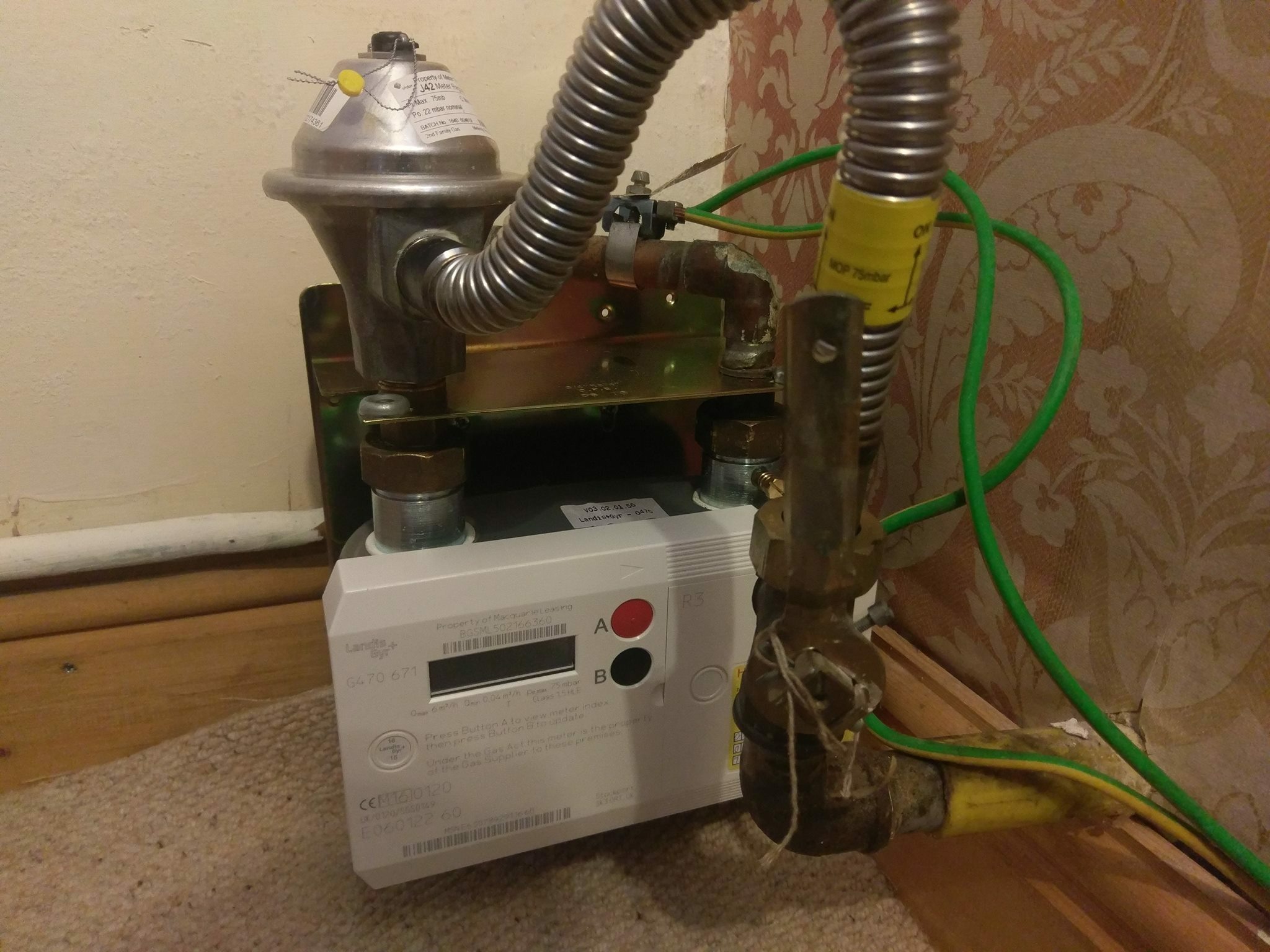
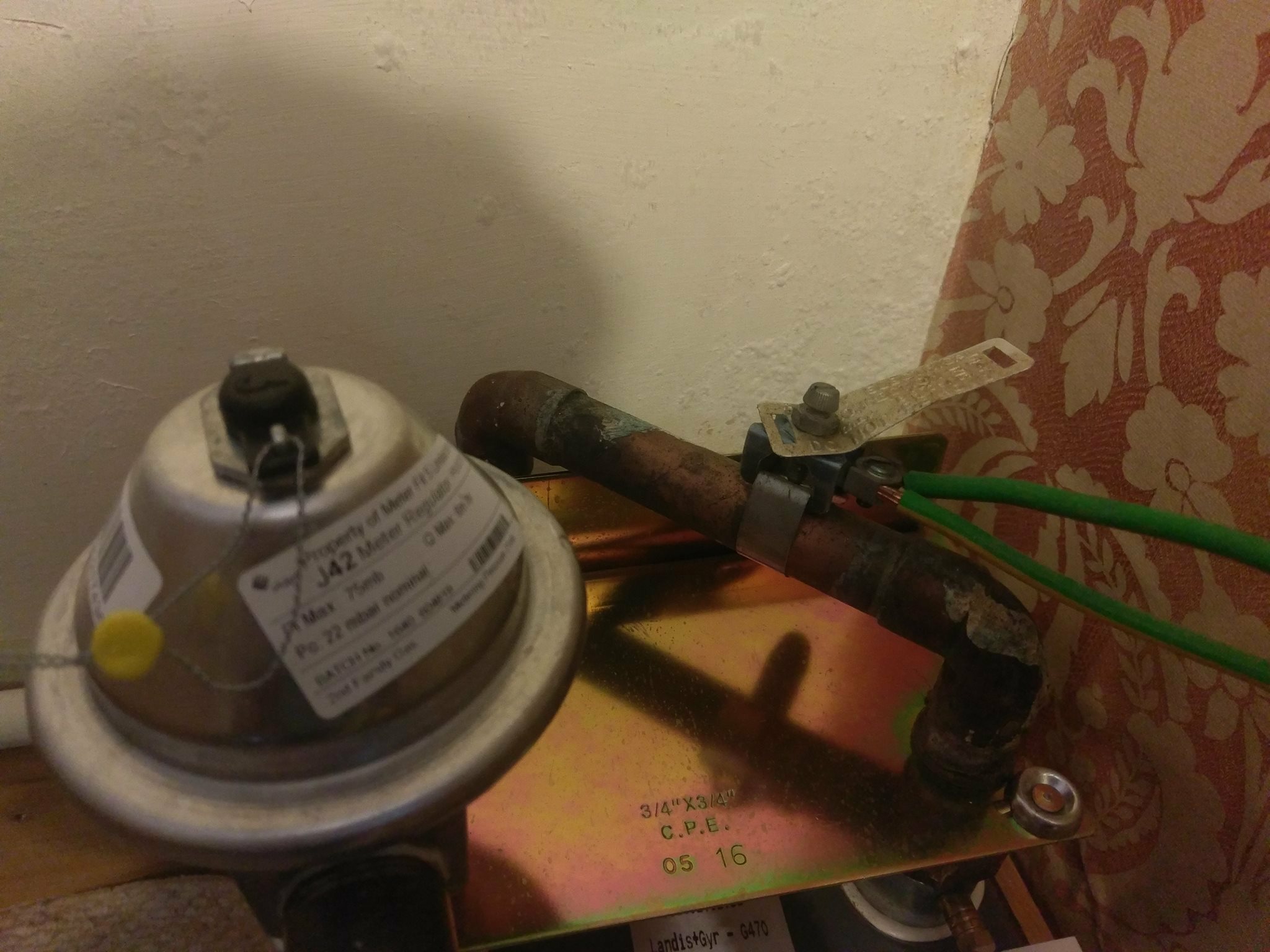
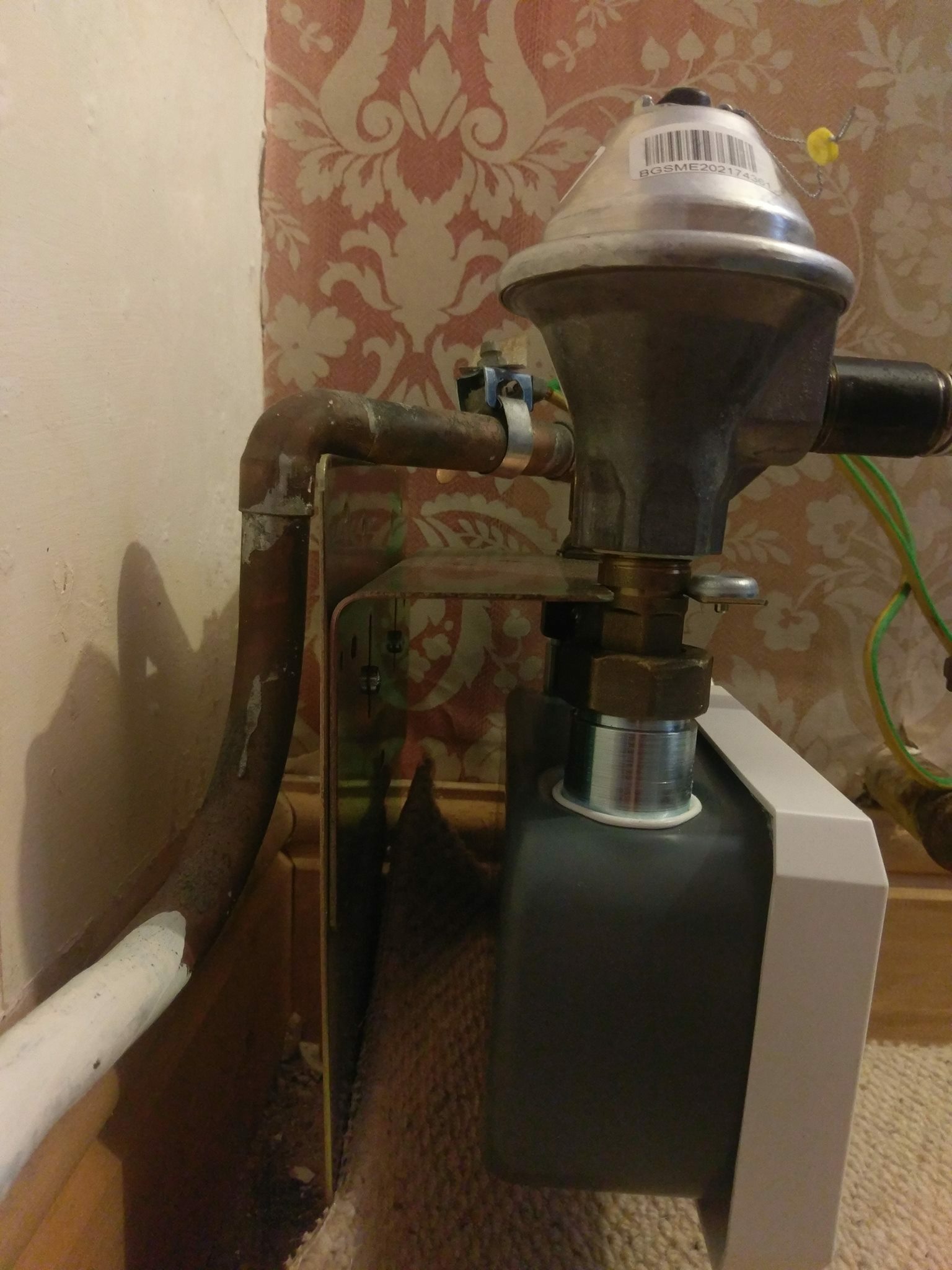
I've attached pictures - could you tell me what needs doing so that the "fully qualified" engineer can come back and finish the job.
Best answer by Eva_OVO

Updated on 14/10/25 by Ben_OVO


When does an earth cable need to be moved?
 

During a smart meter appointment it may be necessary, in a small number of situations, to make some alterations to the pipework connecting to your gas meter. This usually happens either on a semi concealed exchange (when the meter is half submerged in the ground), or if there is lead pipework that needs to be exchanged. As the earth cable is connected to the outlet pipework, it needs to be moved before we are able to change the pipework and replace the meter.


Why can’t the OVO smart meter engineer move and reconnect the earth cable?


Although our smart meter engineers are fully qualified to replace your meters, they’re not specially trained to move the earth cable. Whilst it does just look like one small wire that could easily be moved, the earth bonding is responsible for maintaining the same electrical potential across all exposed metal parts of a supply,  protecting you from getting an electric shock from the gas pipework. Electricians require a specific qualification to do this to ensure the earth cable is adequately bonded and your home and it’s inhabitants are kept safe.

Our smart meter engineers aren’t given training in this, as it is rare for them to encounter this in the majority of smart meter installations. 


What to do if you if your smart meter installation is stopped due to an earth cable?


Reach out to a qualified electrician, to get them to perform the necessary work. The earth bonding needs to be within either 600 mm of the meter outlet, or in the case of an external gas meter it can be within 600 mm of where the pipework enters the property.

Once the work is done, contact our Support team to get a the appointment re-booked (we may request a photo showing the completed work).


OVO customer but not got a smart meter yet? - Book today!

Interested but not yet an OVO customer? - Check out our plans!


55 replies

Newcomer
February 1, 2020

Hi @Transparent and thank you for the warm welcome :grinning:

Fully understand and respect that the earth bonding is outside of the remit of the OVO Installer and would require an electrician, no problem with this. However, as I’m sure you can appreciate, I don’t want to spend money on this without an official ‘spec’ as to where it should be moved to to enable the smart meter to be fitted, otherwise another OVO Installer could come out and report it’s still a problem, and so on…!

I’ll grab a photo in the daylight tomorrow and post it here, cheers.

Transparent
Rank 20
Rank 20
February 2, 2020

It’s more than an “official spec” that you require @CrispyUK .

The IET Regs state that the earth bond must be made to the gas pipe within 600mm of where it enters the property.

Equally, an installer may need to make soldered alterations to pipework in order to fit the Smart Meter. He/she may not do this if it compromises the earth bond, either because it’s physically in the way, or because it would be damaged by heat.

I have several solutions for this.

So upload a photo (or two) and let’s see what your situation is.

If it helps you to zoom/crop the photo, I can tell you that the horizontal distance on this Forum column is about 800 pixels. So there’s no point uploading something of much higher resolution!

Save energy... recycle electrons!
Newcomer
February 2, 2020

As promised, please find a couple of photos attached of my current meter installation. Comparing these to your pictures in the thread you have helpfully linked @Transparent, it looks like it should have been a relatively easy switch, assuming Ovo are still fitting the same meter model. The mounting frame added to your box, appears to be an integral part of this box.

I’m not an expert but comparing the photos I cannot see that any soldered alterations would be needed on the ‘house’ side of the meter, it looks like the existing pipework would re-connect to the new meter as-is. The Ovo fabricated pipes indicated by purple arrows in your picture seem to be specifically solving the problem of limited headroom above the meter in your box, my box has a bit more height to it.

I could get the earth bond moved just outside the meter box, although it wouldn’t look as tidy and would be less protected from the elements, so I don’t want to go to the expense of doing this unless it’s required :money_mouth:

Any insight/thoughts would be appreciated, thanks!

Overview of gas meter box
 
Close-up of property side connection and earth bond


Transparent
Rank 20
Rank 20
February 2, 2020

Thanks for the photos @CrispyUK 

I think you are correct in your assumption that your meter box already acts as an effective mounting cradle.

However, there will certainly need to be fresh brass connections on the output of the new SMETS2 meter. There is also the possibility that the final nut will need to be outside the meter box itself. Mine is.

So for that reason, the existing earth connection will indeed have to be moved. Moreover it should be located such that the installer still has the option to cut the pipe just outside the box.

Personally I would use a small hacksaw or multi-tool to remove a part of the black plastic shroud and fit the earth-bond just above the 22mm 90º bend. The pipe will of course need to have paint and oxidisation removed at this point.


Relocating an earth connection is usually undertaken by a qualified electrician. The whole point is to ensure that it does indeed offer an effective earth, and that means taking measurements back to the earth-block inside your consumer unit and to an earth stake (if one exists).

And this is the main reason why Meter Installers aren’t permitted to move earth bonds. The only way to ensure it is effective is to undertake a full test of the other house earthing.

It is all too common for houses to have inadequate or incorrect earth arrangements. Typically someone may have fitted an earth stake, unaware that most houses are supplied from a PME sub-station. Qualified electricians know the required resistance readings and understand these rules. (DIY practicioners rarely do!)

Quite rightly, OVO aren’t prepared to have their Installers move an earth bond without knowing the integrity of what it’s actually connected to.


You could of course move the earth bond yourself. That would mean the Smart Meter could be installed.

But the question then remains… how do you know that it’s effective?!

It is, after all, a safety feature!

Save energy... recycle electrons!
c_n
Newcomer
Newcomer
February 17, 2021

Good morning, @Transparent


Do you think this Equipotential Earth bonding will prove problematic?

Gas meter backing onto external wall


Transparent
Rank 20
Rank 20
February 17, 2021

Hi @c_n and thanks for the photo. It helps a lot!

Remember I’m not a gas fitter (qualified or otherwise!). But I understand the underlying physics behind earth connections and bonding.

For the sake of other readers arriving here later, the photo shows a fairly standard “bellows type” traditional meter. The pipe connections at the top are a standard distance apart, so we would expect a meter exchange to be pretty straightforward.

The earth bonding wire in this case is on the input side of the meter, which is identified by the large round pressure regulator. The label lower down on that pipe suggests that the gas cut-off lever valve is just out of shot to bottom-left of the photo.

Nothing in this picture suggests to me that there will any problem, assuming that the brass nuts on the ends of the pipes can be mated with the new equipment. Only an on-site engineer with a spanner can assess that!

Remember that a Smart Meter installation does not check the functional integrity of the earthing. That’s a series of tests which would require an electrician. So if the earth bonding clam can be left in situ, then the installation work will make no difference to how good your earths are!

Save energy... recycle electrons!
c_n
Newcomer
Newcomer
February 18, 2021

@Transparent it’s a four:two digit Schlumberger meter recording gas usage in ft³; it may even rollover this year :upside_down:

I might have the earth–bonding extended to the right hand output side where it tees off (that gap in the paint bottom right in the picture) for the boiler that is situated above it. :thinking:

Transparent
Rank 20
Rank 20
February 18, 2021

Ah… well I’m glad you’ve posted that update.

Extending earth-bonding is permissable, but not recommended. It’s too easy for the extension joint to oxidise over time because there’s no current running to keep it clean.

When I run an earthing wire to multiple points, I loop it through the clamps without cutting the wire.

10mm earth bonding looped across 4 pipes

You could retain your existing earth clamp on the input side of the gas meter and add another  half-metre from there to a position on the boiler feed which you refer to. But make sure that the screw is tightened very strongly where the wires join.

The rule for the positioning of earth bonding on a gas supply is that it must be within 600mm of the entry point into the building. So my assumption is that the present location is correct.

It’s a tricky subject, isn’t it?!

Save energy... recycle electrons!
c_n
Newcomer
Newcomer
February 19, 2021

Ah… well I’m glad you’ve posted that update.

Extending earth-bonding is permissable, but not recommended. It’s too easy for the extension joint to oxidise over time because there’s no current running to keep it clean.

:scissors:


The rule for the positioning of earth bonding on a gas supply is that it must be within 600mm of the entry point into the building. So my assumption is that the present location is correct.

It’s a tricky subject, isn’t it?!

Indeed.


Transparent
Rank 20
Rank 20
February 19, 2021

Thanks again for a photo @c_n 

For the benefit of others arriving here later:

I recognise the type of “ruler” in the above photo. It’s a roofers’-square. The graduations on the left start at floor-level, whilst those on the right are used for an internal angle.

So c_n’s Bonding point is 540mm above FFL (Finished Floor Level) plus about 60mm along the horizontal part of the pipe. It’s only just within the regulations!

Having said that, it is far too common for this bonding point not to be compliant. It also depends whether you count the wall or floor through which the gas pipe first travels.

The worst scenario is to have the point of entry below floor level where no one can see whether there is an effective earth or not. For this reason, my earth bond is actually outside the house (within 600mm of the point of entry):

At the end of the day, common sense must prevail. After all, the regulations themselves are founded on this principle.

Customers shouldn’t attempt to reposition such an earth bond themselves. Without the test equipment carried by an electrician it’s not possible to tell if the earth is effective. Let’s remember - it’s there for our personal safety!

Save energy... recycle electrons!