


Rank 2
May 29, 2023
Solved

Flow Temperature settings of my Mitsubishi Ecodan heat pump set correctly?

  • May 29, 2023
  • 37 replies
  • 12840 views

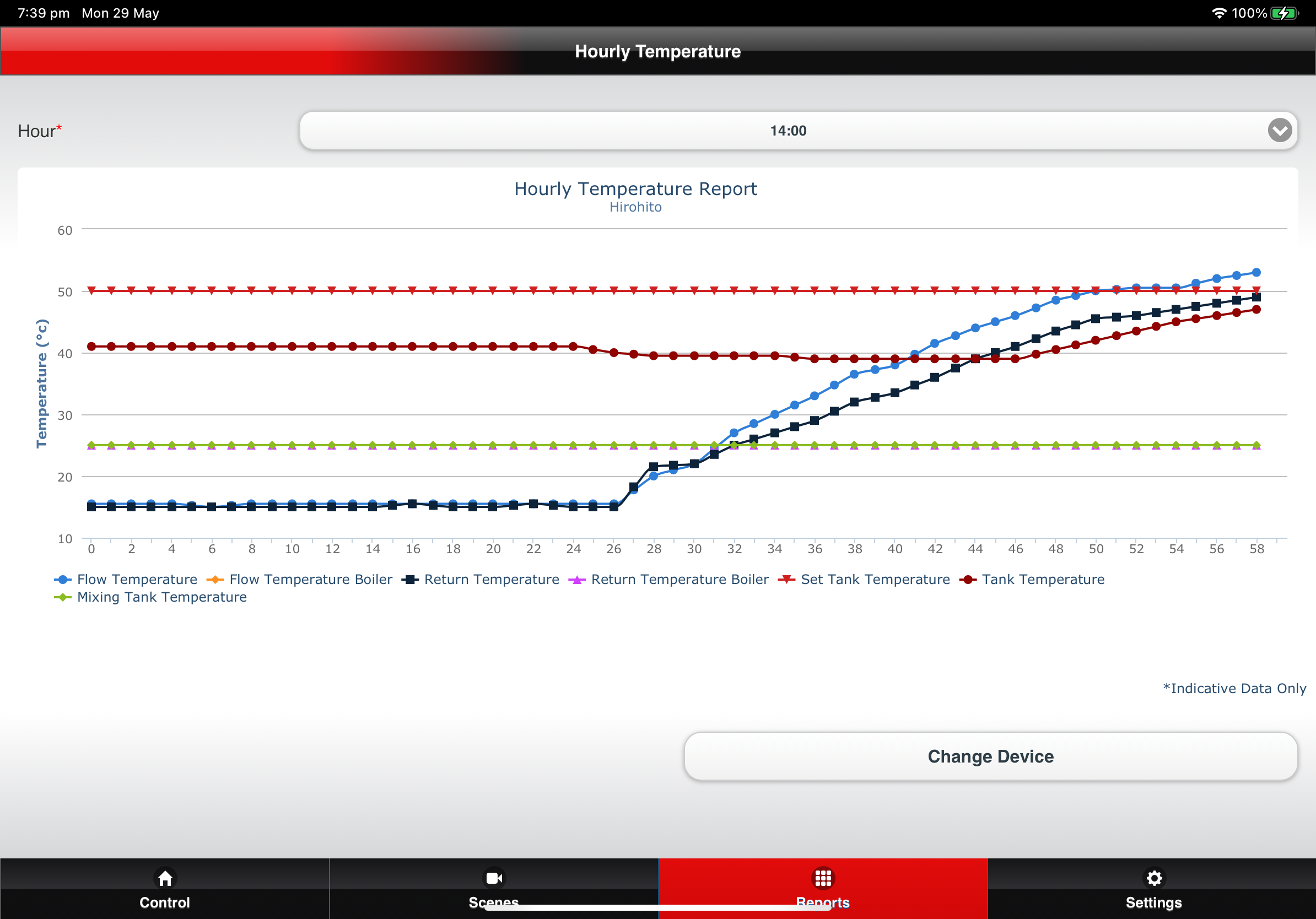
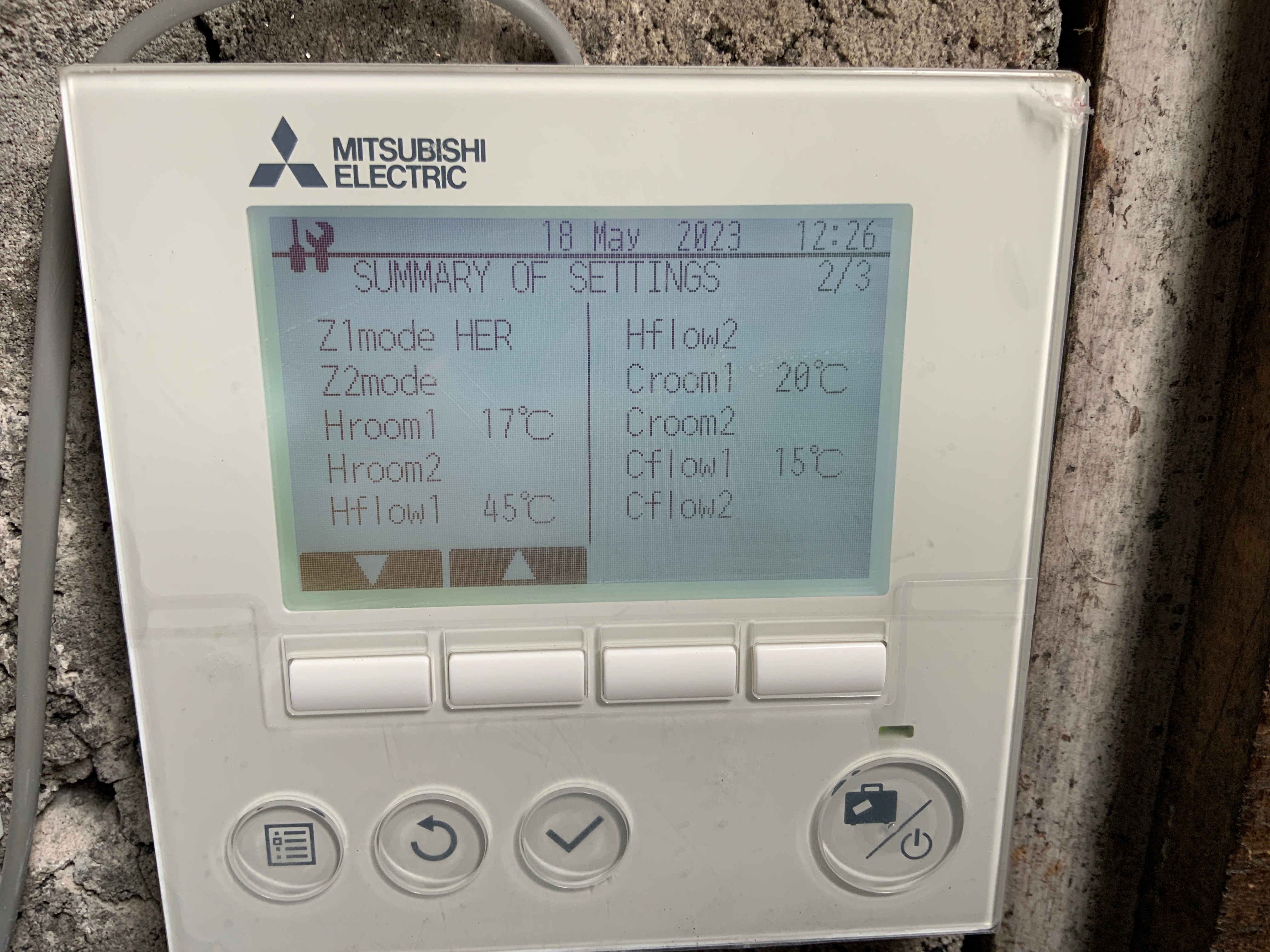
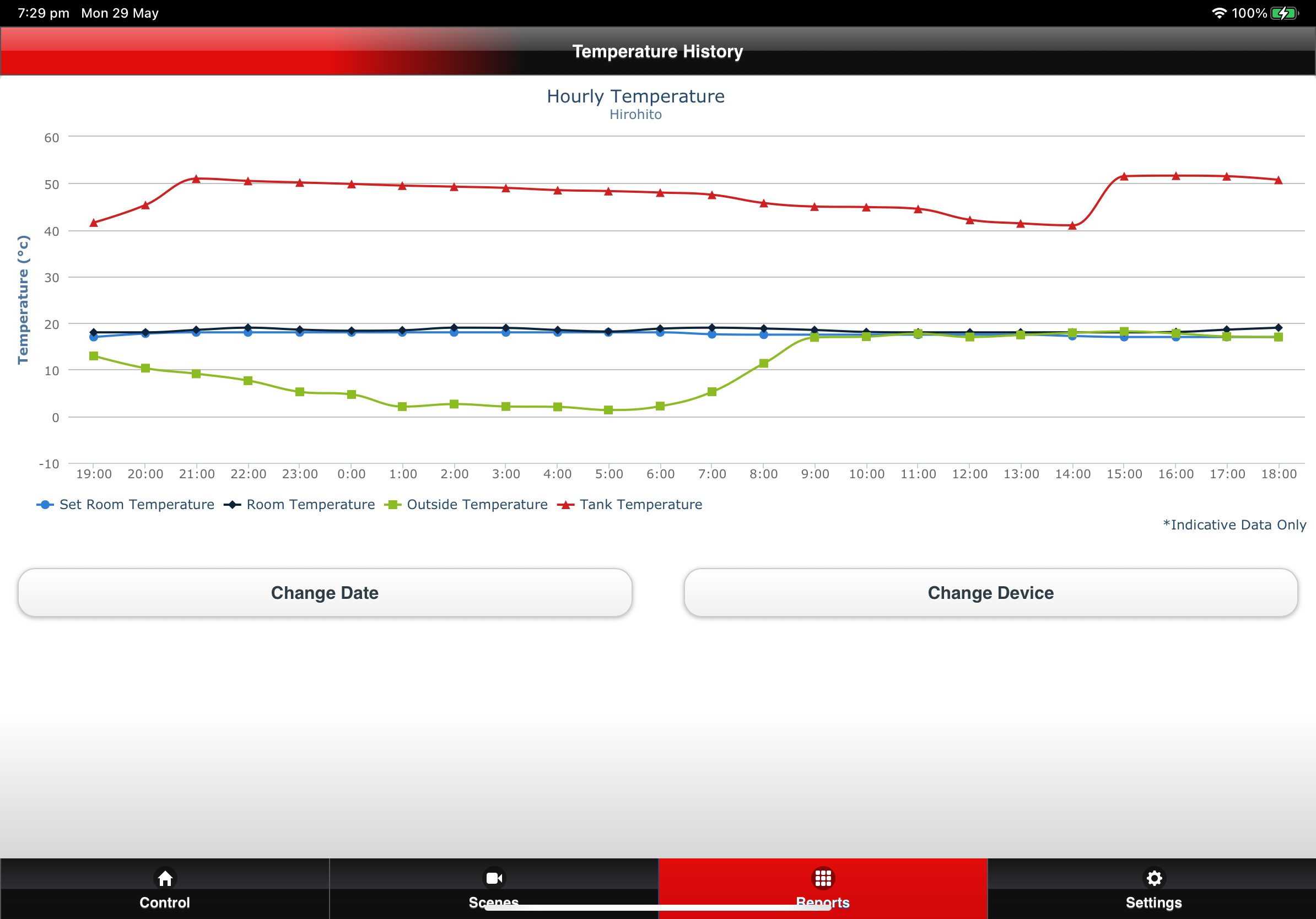
Can anyone tell me what these particular settings mean please see photo 1 of FTC6 controller (I am still on the ASHP learning curve) - I am trying to grapple with whether the Flow Temperature settings are too high/too low/just right. At the moment the outside temperature during the day has been about 18 degrees, at night we have been having near freezing temperatures. See photo 2 from Melcloud. My system is set to run 24/7 which I believe is the most economical way - low and slow. I have been having the room control set to 17 in the day and I have put it up to 18 in the evening during my off peak hours. if I move it up or down it’s only by half a degree.  My problem is that I previously had old storage heaters and this thing is using a fraction of the electricity that they were using, so all the angst about 2.5kwh usage on this forum seems irrelevant to my situation. With my storage heaters I was using 40kwh a day on May 1st, if which 7kwh was all the other stuff including oven. The Ecodan was fitted on 2nd, and now my usage (total) is currently between 8 and 10kwh a day. Happy days! But I am trying to find out as much as I can about the way the current settings are working, preparatory to the Winter when we frequently have as many as 20 days a month with below zero temperatures.  Snow lying many times between November and April. The Melcloud app is quite un-user friendly. I will go into the settings myself before winter to adjust if need be. I have already changed the legionella settings following Heat Geek video, once every 15 days to 60 degrees time 1 hour during off peak, holding for 5 minutes; that should save some money. What I want to do before winter is set up the weather compensation mode. At the moment though I am wondering what the Flow temperature settings on the right of the control panel mean. And if the flow temperature is low enough, too high, or too low - see photo three where something exciting seemed to be happening at around 2.30pm even though I didn’t change anything….!Presumably the water heating up as it had dropped below 40.
(as per advice on heat geek site for hotter weather).

 

Best answer by M.isterW

The first thing to tell you is how the melcloud app works. It doesn't change the settings on the FTC. It overrides them with messages from a cloud server. So my recommendation is to make changes on the FTC and only use melcloud for monitoring.


Are you using weather compensation mode or auto adapt, with a Mitsubishi internal temp sensor?

Are your rooms getting to the correct temperature and staying there?

37 replies

juliamc
Rank 20
Rank 20
May 30, 2023

@M.isterW ?

M.isterW
Rank 6
M.isterWSolved
Rank 6
May 30, 2023

The first thing to tell you is how the melcloud app works. It doesn't change the settings on the FTC. It overrides them with messages from a cloud server. So my recommendation is to make changes on the FTC and only use melcloud for monitoring.


Are you using weather compensation mode or auto adapt, with a Mitsubishi internal temp sensor?

Are your rooms getting to the correct temperature and staying there?

1992 4 bed detached house. Solar PV + battery, Zappi EV charger, Mitsubishi Ecodan ASHP and i-life2 fan assisted radiators.... No gas 😊
Tim_OVO
OVO Staff
OVO Forum Legend
May 31, 2023

Great post, @amanda1


When you get a sec, have a look at the advice and follow up questions from M.isterW and we can get you, and anyone that finds this topic after you, the help you need. 

Carbon neutral - we need a community to get there! My green tech: Aclara SGM 1411-B smart meter, Chameleon IHD6
amanda1Author
Rank 2
May 31, 2023

@M.isterW thanks for your reply….I am not trying to use the Melcloud app to change settings. I am at the moment trying to get to grips with the FTC6 control unit, which is in the most useless place it could be, in a tight-ish narrow cupboard which is where the cylinder is. See photo. Before anybody comments on the location of the cyylinder…Yes it is not ideal, it is in the coal shed, but I have insulated the door now, and the location is surrounded on the three other sides by rooms in the house.

I have got as far as checking what the Summary of Settings is, and I have manually altered the Legionella settings slightly so that it runs during my off peak hours.

I am running the ASHP 24/7, not on timed settings (obviously at the moment it is idle a lot of the time). Operation Mode is room temperature rather than flow temp or Weather Comp. I have it set at 17 on the room thermostat (1 zone only, 8 big rads, have thermostats all set the same at 3). This is a bungalow.

At the moment the outside temperature is 18-20 degrees during the day, so the heating isn’t kicking in much, and in the evenings I nudge it up by a degree at most if I need to. When I do that, the heat is delivered pretty quickly even though the rads never get more than vaguely lukewarm.  Then down to 17 overnight. The living room has a thermometer and it reaches the set temperature plus some. The other rooms seem to be evenly heated also. But I haven’t measured that. And the house doesn’t smell damp anymore..,,Overnight we are still getting frost, but it is taking the cylinder about 15 hours to drop from about 50 to 42 at which point the DHW kicks in. 

I have different priorities from people who previously had access to the gas grid. I am delighted with this system so far and will not be dissatisfied if in winter it continues to deliver an internal temp of 18 even using 60kwh a day, maybe even more, which some people are distressed about,  I wanted a heating system that would be more efficient and future proof. The whole system plus cavity wall insulation has been paid for and installed on local government and Home Energy Scotland grants, therefore has cost me nothing. I previously had old storage heaters. We do not have access to gas in the village, which is in the Cairngorms. Only electricity. So for ten years my bills have been humungous, usage up to 60kWh a day from Nov through to April, 30 kWh a day in Summer. 14000 kWh per annum on average.  For not much heat at all. But at the moment, my total usage per day is 6-10kWh. So I am in a different situation from all these people who were using gas boilers in bigger houses with internal temperatures of 21/22. I do not want my house to be at those sweltering temperatures, in Winter I will be looking to have 18-19 degrees internal temperature. I will supplement the ASHP if necessary

with my log burner. All my calculations of running costs are based on worst case scenarios where the tariffs are higher than now and the ASHP uses at least what my old heaters were using. 

It is an Ecodan WM 85VAA. At the moment it is not set for weather compensation but I will be wanting to do that in winter. Heat Geek says, the best time to set that up is when it’s cold. It is currently operating in Normal mode. Most of the settings are the default settings except for Legionella and Freeze stat.

Because it is an FTC6 controller the Energy Usage report is only indicative, but it tallies with what I am seeing on my meter, and I am monitoring usage daily. 

My big concern is the Freeze Stat Setting - the minimum setting is for it to kick in at 3 degrees but in winter we can have up to 20 days in December where the temperature is freezing and there is snow lying. A neighbour had hers deactivated and it was much cheaper to run after that, but of course this means that you are dependent on the anti-freeze being sufficient to prevent freezing, Mine is currently deactivated. 


juliamc
Rank 20
Rank 20
May 31, 2023

Can I suggest you open your TVRs fully - if they’re like mine that’s marked Max. The idea being that you don’t want them to close at all as the system should have all the rad water whizzing round as much as possible (not the correct term !).

amanda1Author
Rank 2
May 31, 2023

@juliamc  thanks, yes, I have them all set at 3 at the moment, rather than some at closed and some open. Incidentally, it isn’t water whizzing around them apparently. It’s glycol?

M.isterW
Rank 6
Rank 6
May 31, 2023

It might be worth taking a step back and talking about the different options for running your ASHP (apologies if you already know this).


1 - Fixed flow temperature. This runs the heat pump at the same output temperature all the time. This is how my heat pump runs because of the type of radiators I have but if you have standard radiators or under floor heating you don't want to use this setting.


2 - Weather compensation. This changes the ASHP flow temperature according to the outside temperature. The theory behind this is that the heat pump provides just enough heat to keep your house at the required temperature without needing any other controls. When it's colder outside the heat pump provides more heat to keep your house at your chosen temperature. You can adjust the settings to make sure it is providing enough heat (and not too much heat). With this setting you should have all TRVs fully open and no internal thermostat.


3 - Auto adapt. This is a setting that's specific to Mitsubishi heat pumps. It uses Mitsubishi's own internal thermostat to manage the flow temperature of the heat pump. It aims to run at the lowest possible temperature while keeping your house at the right temperature. Lots of people find that this is more efficient than weather compensation. It also requires your TRVs to be fully open.


I think you're running in auto adapt mode. If that's the case I would stick with it, but open all your TRVs. I don't think you'll get any benefit by changing to weather compensation mode, although if you want to try it you can always switch back.

1992 4 bed detached house. Solar PV + battery, Zappi EV charger, Mitsubishi Ecodan ASHP and i-life2 fan assisted radiators.... No gas 😊
amanda1Author
Rank 2
May 31, 2023

@M.isterW Many thanks for your explanations - very useful to have some indication that the auto adapt setting is efficient, although I am not yet up to speed with the proper names for these settings, I know that it is not running in Weather Comp. mode. I do have a single wall mounted thermostat in the hall and the hall radiator has no thermostat.. The hall is small so I am considering having all the doors open even though that goes against the grain…..

The guys who set this system up were singularly uncommunicative. They left me with a bunch of Mitsubishi manuals but no contact number (!) and just a lightning speed explanation of the hall thermostat. Everything I have found out I have found from this forum, from youtube and from googling. It is a steep learning curve! 

My original question was about the settings on the FTC6 on the 2nd page of the Summary of Settings (see photo) - can anybody tell me what the settings on the right hand side refer to in plain English - ie Hflow2 CRoom1 20C Cflow1 15C? 

And, should I have the Freeze stat on but set to the minimum setting of 3 at which temperature it will be coming on all the time in winter -

or have it deactivated and rely on there being the correct amount of antifreeze/glycol? in the system?

Newcomer
November 27, 2023

I’ve never seen this screen explained anywhere, but I think Hroom1 is your set temperature and Hflow1 is the max allowed flow temp - if you had a two-zone setup then there would be figures in the other two lines as well. The C… lines will relate to the cooling function, these will be default system figures, I doubt you have cooling enabled!

As the outdoor unit and pipework are at risk of damage from the static water freezing and bursting the pipes some prevention is needed. You have glycol added to your system so that will prevent freezing to some figure well below zero, I don’t know offhand but should be in your paperwork filled out by the installer I think. If you only had water in the system  (as I do) then in order to prevent damage the freeze stat function will start the circulation pump when the temp drops to 3, the water in the pipes is likely to be quite warm if the heating has been on and that going round and round just keeps everything out of danger. If the heating was off for a long time and water got down to that temperature then you would have valves fitted that opened to empty the pipes. So you don’t need freeze stat setting to be on.

The hall thermostat is the mitsubishi wireless remote I presume? Auto adaption is a better mode as you don’t have to worry about tweaking how the compensation curve is set up or applied, it will work out the best temperature to output to maintain your set internal temp. I have used both modes and find AA to be more cost effective. Increasing the set temperature by a degree to  ‘force’ the system to add heat into the house when rates are cheap, and have a rest when the rates rise again, is an ideal way to get extra value out.


Rank 2
December 18, 2023

What a relief to find your posts!!!

I am on day 5 of going through exactly the same process of learning the ropes.  

I was told not to read the instruction manual as I would need a PhD to understand it. This advice was not wrong!

I'm googling, researching, contacting people and I STILL can't get the answer to how to get the blasted heating to obey the timer schedule I've put in.  Something, possibly to do with hw2 flow, which is why I've ended up here.

I'm thinking of retraining as a heating engineer..…

Keep going. If I can , you can and we'll beat the system together.

Meanwhile, after two more hours of stress research, I am going to get Christmas organised.  It'll be considerably easier. Not something I ever thought I'd say!

Regards

Vicki