



The rise of Plug-in Solar: Why Britain is finally catching up with Germany's balcony revolution
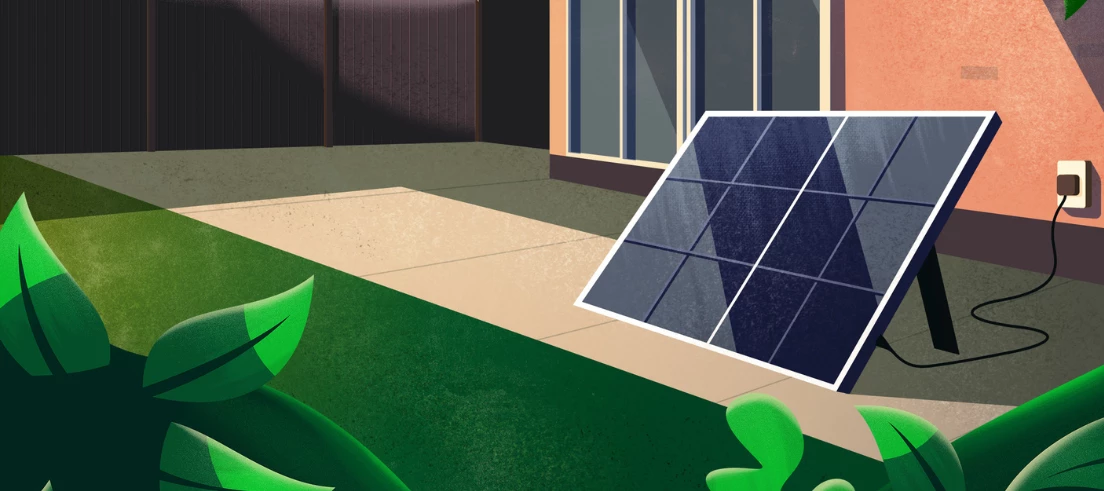
For many years, "going solar" in the UK meant setting up scaffolding, hiring an MCS-certified installer, and paying thousands of pounds. That changed on 27 August 2026, when a new legal framework came into force, allowing compliant plug-in solar kits to be connected to a home's electricity supply via a standard plug and socket.
What's actually changed
Until this year, UK wiring regulations effectively assumed that any generator connected to the home's circuits had to be hard-wired in by a qualified electrician. That single assumption locked plug-and-play solar out of the market, even as it became a mainstream product across the Channel.
Three important regulations needed to be updated together to address the issue. These are: changes to the Plugs and Sockets (Safety) Regulations 1994 (also known as PSSR), updates to the Electricity Safety, Quality and Continuity Regulations 2002 (Statutory Instrument 2026 No. 848), and an update to Chapter 712 of the IET Wiring Regulations (BS 7671, Amendment 4). Additionally, a new product specification was created to clearly define what a "compliant" kit must include.
The headline rules for anyone considering a kit:
800VA AC limit - the inverter can't push more than that into the home's circuits, though the panels themselves can total up to around 2,000W DC.
The complete kit must be certified, not just the individual components - buyers need to check the ENA Plug-in Solar Type Test Register for a "Compliant" listing before buying.
One device per household - following Engineering Recommendation G98 Issue 2 Amendment 1 - not one per circuit, which some early guidance got wrong.
No extension leads - The official guidance advises that any plug-in solar kits must be plugged directly into a fixed 13A wall socket. Extension leads are designed to send power from a wall socket to an appliance, not the opposite way around.
No battery storage - Current regulations do not allow battery storage systems. This means that any energy generated must be used right away.
The German blueprint
None of this happened in a vacuum. Germany has spent the last few years turning balcony solar from a curiosity into a mainstream consumer category, and it's worth understanding why, because the UK is essentially importing a version of that model.
The German numbers are impressive. Official registrations passed the one-million mark by mid-2025, roughly double the figure from a year earlier. Currently, the figures suggest that 1 in 10 households use plug-in solar, which is an exciting forward indicator.
Why did it take off there specifically? A few factors lined up:
Renters, not just homeowners, could participate. Roughly 55% of German households rent, the highest share in the EU, and a balcony is often the only "roof" a tenant actually controls.
The rules got simpler, not just more permissive. Germany's 2024 Solarpaket I raised the legal AC limit from 600W to 800W and cut registration down to a single free online form, taking under half an hour, with no electrician and no grid-operator paperwork required for a compliant kit.
The economics were unusually favourable, with 0% VAT on panels and inverters since January 2023, high residential electricity prices, and city-level subsidies in places like Berlin, Munich and Hamburg cutting effective costs to as low as €200.
The ceiling on what balcony solar can achieve is well understood in Germany, too. It's worth stating plainly rather than overselling: a well-positioned south-facing balcony system might cover somewhere in the range of 15% of a household's electricity use on a good day, but even universal adoption across every suitable balcony in the country would only meet around 1% of Germany's total energy needs, according to the country's own network regulator. The value isn't primarily in national energy statistics — it's in giving millions of renters a low-cost, low-effort way to participate directly in the energy transition, and in the cumulative emissions saved.
What this means for UK households
The UK isn't Germany, as homeownership patterns differ, our sockets and consumer units aren't identical, and the DNO notification and "one device per household" limit mean this won't scale in quite the same freeform way it has there. But the direction of travel is the same: a category of solar that doesn't require a mortgage sized budget, a landlord's blessing for structural work, or a rooftop at all.
It's an exciting discussion that paves the way for more households to become energy generators at a much lower entry cost. We’d love to hear from our community. Are you ready to invest in plug-in solar panels, or have you already embraced this change and are reaping the rewards?
Helpful links and resources: