

Once the novelty of watching the remote display has worn off (And it doesnt like to be to far from the meter!) You start to wonder WHO did this benefit?
The ONE benefit I thought i would get was accurate Direct debit amount settings! NO, you still get the OTT increases and over payments with an automated FORECAST that never reflects actual bills and seasons.
Plus… I couldnt have the Gas Smart meter which is WHY i wanted one in the first place since the Gas meter is in such an awkward place to read….. all down to DISTANCE that even my bluetooth keyboard and headphones could easily cover?!
I also had to waste my time and the Engineers a SECOND time as I was told OVO used the new RELAY transmitter to bridge the gap so i COULD have the Gas smart meter when HE told me no such relay is used by OVO?
So, the only benefit was for the Utility companies to do away with actual meter readers!?
- Forum
- My OVO energy
- My account
- What is the BENEFIT to the customer in getting a smart meter?
What is the BENEFIT to the customer in getting a smart meter?
- July 16, 2025
- 66 replies
- 774 views
- Rank 2
Best answer by Emmanuelle_OVO
Hey
Welcome to the OVO Online Community 🙂
I can see our community members have already given some helpful advice here, just wanted to add the following:

66 replies
- Rank 2
- May 27, 2026
Hi everyone, looking for advice on whether getting a smart meter actually helped lower or better manage your energy bills.
Right now Ovo charges me a fixed Direct Debit every month, but my actual usage is often much lower. Some months I only use around £27–£45 worth of energy, but they still take about £50 every month and I feel like I’m building up too much credit for no reason.
I’m considering getting a smart meter ovo gets accurate readings instead of estimates. Did switching to a smart meter help you:
- reduce your Direct Debit,
- stop overpaying,
- or get more accurate bills?
Also were there any downsides?
Would appreciate hearing real experiences before I agree to the installation.
- Super User
- May 27, 2026
OVO policy at the moment is that everyone should have at least one months direct debit of credit on 31st March, so DDs can sometimes be inflated for a year to achieve that figure.
Then of course even DDs for actual use are averaged over a year, so in summer you pay for more than your actual use, in winter you pay less than your actual use.
OVO don't do a “pay what you have used this month” DD. Some other suppliers do but that means that your DD will change every month, which isn't great for budgeting.
As for smart metering then yes go for it, especially if you keep having estimated readings.
Just having accurate readings rather than estimates can often reduce your DDs.
(It can take up to 12 months but I reckon that my overall DD has now reduced by about 30% fom what it would have been, simply by having accurate readings sent in everyday by the smart meter).
As for reducing your usage it's a case of each to their own, but with a smart meter recording half hourly usage then you can see from the timings where you are using a lot and work out what appliance is using it.
Eg. My main electric oven/hob only gets used verry occasionally now I've seen just how much power it uses, it's much cheaper to cook the same meal using Air Fryer and Microwave.
- Super User
- May 27, 2026
I’m considering getting a smart meter ovo gets accurate readings instead of estimates.
Usage is only estimated when the supplier doesn’t have meter readings to go by. Most suppliers now use monthly billing periods, so those with non-smart meters have to submit readings on the right day every month if the resulting bill is to be accurate. Meter accuracy is carefully controlled, and we’ve seen very few cases of imprecision - most of them involving gas meters.
Did switching to a smart meter help you:
- reduce your Direct Debit?
The type of meter has no real influence on the size of the Direct Debit (DD). OVO recalculate the estimate of future consumption and thus the recommended DD amount whenever a meter reading is received. Having a smart meter means that both these figures will be more reasonable.
Did switching to a smart meter help you:
- stop overpaying?
What do you mean by ‘overpaying’?
- Do you think your bills are higher than they should be considering your usage? Bills will always be based on how much energy has been consumed, and the only way for the supplier to know that is from meter readings.
- Or do you think your Direct Debit is too high compared to the size of the bill each month?
You will only ever have to pay for the energy you’ve used. For billing to be accurate, then, there must be regular meter readings. Non-smart meter customers should submit monthly readings; smart meter customers don’t have to.
Did switching to a smart meter help you:
- get more accurate bills?
I think I’ve already answered this point. The bill will be as accurate as the data it’s based on.
… were there any downsides?
None at all that I can think of.
I suppose some might regret the amount of time they spend on playing with all those lovely figures that become available after having a smart meter installed. I don’t!
- Rank 2
- May 27, 2026
Thanks, that helps clarify things a bit.
I think my confusion is that I’m currently paying around £49/month by Direct Debit, but my actual usage seems closer to about £26/month. I originally thought that getting a smart meter would mean I’d simply pay exactly what I use each month automatically.
A couple of years ago with previous suppliers, my monthly payments used to vary depending on actual usage, so I’m trying to understand whether OVO’s system is different.
If I get a smart meter, would I still stay on a fixed averaged Direct Debit, or is there an option to pay based purely on actual monthly usage from the smart meter readings?
I’m basically trying to work out whether:
- keeping the traditional meter + current DD,
- getting a smart meter + fixed DD,
- or getting a smart meter + paying on receipt of bill
would make most sense for my situation.
- Rank 11
- May 27, 2026
You can choose to pay on receipt of bill but that makes it more expensive, both for standing charge and unit rates. OVO does not offer a “variable Direct Debit option” which is when the exact amount of your bill is taken from your account, automatically via Direct Debit, each month.
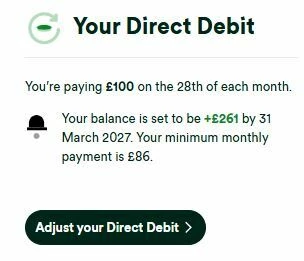
Personally, as someone on a fixed income, I would not choose either of these. I much prefer the Direct Debit that I have been paying for a few years now of £100 per month for gas and electricity. I also, deliberately, choose to keep a certain amount in credit throughout the year as it allows us to choose to keep warm in winter and to use our electric oven or tumble dryer if, absolutely, necessary. I also have a glass fusing kiln that I do not use as often as I used to use it, but again, my Direct Debit allows me to be able to choose to do so whenever I want to.
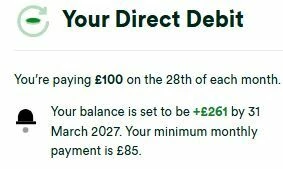
OVO do review our usage and Direct Debit payments every three months. Every day on my online account, there is a box (see attached graphic) that advises what my minimum payment could be. Personally, I ignore this. When my DD is added to my account tomorrow, this amount is likely to change to a lower amount. If I made the change, the amount I would be paying I know would not cover my winter usage. Whenever OVO tell me, via email, that they intend to lower my Direct Debit, I ask them not to do so.

One of the things that our change from a traditional meter to a smart meter sending readings every half hour that we could see the next day was to highlight how energy hungry some of our appliances were. We now use our air fryer and/or the microwave instead of the main oven. Since we use electricity for almost everything except heating and hot water, even during the summer, this gave us instant savings that we could actually see from real, personal data rather than product promotions.
At the moment, there are a couple of current OVO promotions available to those with smart meters that do give small, extra savings: Power Move and the 2 hours of free electricity. In my view, every saving is worth having!
- Community Manager
- May 28, 2026
Hey
I’m glad to see a few of our community member have already stopped by with some helpful advice on this one, I hope you’ve found it useful.
As mentioned, variable Direct Debit isn’t something we’ve offered for quite some time. Pay on demand is available if you’d prefer to only pay the exact amount each month, where as our Direct Debits are set up to spread out the cost more evenly throughout the year.
We’ve got a few handy topics dedicated to Direct Debits and how they work which might also be helpful here:
If you’ve still got any questions, do let us know.😊
- Newcomer
- June 4, 2026
I had something similar with my smart meter. It took a little while for the readings to update properly after installation. If it's still not behaving as expected after a few days, it might be worth asking support to check that the meter is communicating correctly.
- Community Manager
- June 8, 2026
Morning
- Author
- Rank 2
- June 11, 2026
Just adding an update, as it has been a while since I first posted this thread. It is now 11/06/2026, and I have had both smart meters installed for some time.
Personally, the only real benefit I have had is that I no longer need to jump up on a wall, in all weathers, to read my gas meter.
That genuinely is the main benefit for me. If my gas meter had been indoors and easy to access, I probably would not have bothered.
The electricity in-home display was interesting for a short while, mainly for seeing which appliances used the most power. However, now the gas meter is also connected, I do not really look at it anymore. The gas usage does not update instantly in the same way, so the novelty wore off quite quickly.
My main issue is that having smart meters has not solved the Direct Debit problem.
OVO still appear to predict future usage in a way that does not properly reflect actual bills, seasonal use, weather changes, or future price changes. The Direct Debit suggestions still seem out of sync with what I actually use.
In my view, if a smart meter sends accurate readings, then the account should be billed accurately from those readings. That was how things used to work: you used energy, got a bill for what you used, and paid it.
Now there also seems to be this idea of wanting a month in advance. I do not agree with that, especially when I am not in arrears and am managing my account perfectly well.
When my Direct Debit was being increased based on predicted future use, I also put a stop to that. I am not in arrears, and I prefer to manage the account based on actual usage and actual bills rather than automated forecasts.
So, for me, the smart meters have not reduced my bills, have not made the Direct Debit system more accurate, and have not changed my usage in any meaningful way.
The only real personal benefit has been access: I no longer have to physically read an awkward gas meter outside.
Utility companies may promote smart meters for various reasons, including green targets, convenience, and accurate readings. However, from my own experience, the biggest benefit seems to be on the supplier side: they get automatic readings and no longer need to send meter readers out.
My old meters were fine as far as I was concerned. My usage has been fairly consistent over the 26 years I have lived here, and I had no reason to believe the old meters were faulty.
So my answer to the original question is still broadly the same:
For me, the benefit was convenience only — and only because my gas meter was awkward to access. Beyond that, I have not seen any meaningful customer benefit, especially regarding Direct Debit accuracy.
- Super User
- June 11, 2026
My main issue is that having smart meters has not solved the Direct Debit problem. OVO still appear to predict future usage in a way that does not properly reflect actual bills, seasonal use, weather changes, or future price changes. The Direct Debit suggestions still seem out of sync with what I actually use.
There are two sorts of Direct Debit (DD) currently in use for energy bills: constant and variable. OVO offers only the constant variety, intended to spread the cost evenly over the year. A few suppliers offer variable DD; each month’s usage is costed and a bill issued to the customer, then ten days later or thereabouts the full amount of the bill is automatically taken from the customer’s bank account by DD. This payment method means smaller bills in the summer, with the year’s biggest bill arriving in January when many customers’ bank accounts are severely depleted. Some customers prefer the constant variety of DD, others the variable one.
When OVO sets a DD, there is no prediction involved as you suggest. The only major factors taken into account are the Future Annual Consumption (FAC) figures (seen on the Plan page of your online account), current tariff rates and the current balance on the account.
An FAC estimate will for a mature account (one where the account has been in place for at least a year, and the same meter has been in place for a year) be the same as the actual consumption in the preceding twelve months. In the first year of an account, or a meter’s life, the FAC will initially be set to an industry standard {EAC - Estimated Annual Consumption for electricity, AQ - Annual Quantity for gas). Thereafter, it will take actual usage into account pro rata. OVO submits meter readings regularly to the national database, which adjusts the EAC for the meter accordingly. If all goes according to plan, the EAC and the FAC will after a few months coincide at the actual consumption figure for the previous twelve-month period.
Could this be the reason why your DD amount seems inappropriate?
- Author
- Rank 2
- June 12, 2026
My main issue is that having smart meters has not solved the Direct Debit problem. OVO still appear to predict future usage in a way that does not properly reflect actual bills, seasonal use, weather changes, or future price changes. The Direct Debit suggestions still seem out of sync with what I actually use.
There are two sorts of Direct Debit (DD) currently in use for energy bills: constant and variable. OVO offers only the constant variety, intended to spread the cost evenly over the year. A few suppliers offer variable DD; each month’s usage is costed and a bill issued to the customer, then ten days later or thereabouts the full amount of the bill is automatically taken from the customer’s bank account by DD. This payment method means smaller bills in the summer, with the year’s biggest bill arriving in January when many customers’ bank accounts are severely depleted. Some customers prefer the constant variety of DD, others the variable one.
When OVO sets a DD, there is no prediction involved as you suggest. The only major factors taken into account are the Future Annual Consumption (FAC) figures (seen on the Plan page of your online account), current tariff rates and the current balance on the account.
An FAC estimate will for a mature account (one where the account has been in place for at least a year, and the same meter has been in place for a year) be the same as the actual consumption in the preceding twelve months. In the first year of an account, or a meter’s life, the FAC will initially be set to an industry standard {EAC - Estimated Annual Consumption for electricity, AQ - Annual Quantity for gas). Thereafter, it will take actual usage into account pro rata. OVO submits meter readings regularly to the national database, which adjusts the EAC for the meter accordingly. If all goes according to plan, the EAC and the FAC will after a few months coincide at the actual consumption figure for the previous twelve-month period.
Could this be the reason why your DD amount seems inappropriate?
Thanks, that does help explain how OVO are calculating it, and I understand the difference between a constant Direct Debit and a variable Direct Debit.
However, I think this is also part of the problem I was originally getting at.
If the Direct Debit is based on Future Annual Consumption, tariff rates, and account balance, then it is still effectively working from an annualised forecast rather than simply billing against what has actually been used each month.
I understand why some people prefer the constant Direct Debit model, because it smooths the cost over the year and avoids larger winter bills. That makes sense for customers who want predictable payments.
But for customers like me, who are not in arrears and are quite capable of managing the account, it can feel unnecessary and over-controlled. If the smart meters are providing accurate readings, then the system already knows what has actually been used. That is why I question why the Direct Debit still needs to be pushed around by automated annual calculations rather than actual billed use.
My issue is not that the calculation has no logic behind it. My issue is that the logic does not necessarily suit every customer.
The smart meter gives OVO regular accurate readings, but that has not translated into what I personally would call a better customer experience. I still had to challenge or manage the Direct Debit myself, and the suggested amount still did not feel aligned with my actual usage and account position.
So yes, the FAC may explain why the Direct Debit amount seems inappropriate. But that also reinforces my point: the smart meter itself has not solved that issue.
For me, the only clear benefit has been practical access to my gas meter, because it is awkward to read manually. Beyond that, I have not seen the smart meter deliver the customer benefit I expected, especially around Direct Debit accuracy.
- Community Manager
- June 12, 2026
Morning
I’m glad to hear that everything is working as it should be.
With regards to the Direct Debit, I can understand that the way its set up may not suit you. I personally prefer the way we run Direct Debits, as I know I can pay the same amount every month, without having to worry about paying higher bills in the colder months. However, other people, yourself included, feel better paying for exactly what they use each month. bare in mind, with the current Direct Debit setup, you’re still paying for exactly what you use, however the remainder of the money is sat in credit in your OVO account.
If you’d prefer to pay the exact bill amount each month, there are two options open to you. Firstly, you could switch the Simpler Energy (variable) plan, and pay on demand, rather than with a Direct Debit. Bare in mind that, if you do this, the unit rates will be higher than if you have a Direct Debit set up.
The second option would be to switch to another energy supplier that offers variable Direct Debits, as outlined by
Bare in mind that, if you go for either of these two options immediately, you might incur exit fees depending on which type of plan you’re on.
let us know if you have any other questions.
- Super User
- June 12, 2026
… the Direct Debit is based on Future Annual Consumption, tariff rates, and account balance, … effectively working from an annualised forecast rather than simply billing against what has actually been used each month.
The Future Annual Consumption estimate is for most customers exactly equal to ‘what has actually been used each month’ summed over a year. The estimate takes no notice of future tariff rates or indeed balances - only current figures at the time of calculation.
You can see the suggested DD level on the DD Calculator page, where you can also see what the effect would be of increasing or decreasing it. Unless the account drifts into debt, the DD will only be reviewed at quarterly intervals (and possibly following a change of tariff rate or a refund).
You mentioned earlier the requirement to aim for ‘one month’s credit’ at the end of March. The end of March is chosen as being the end of winter and for many customers the end of the heating season. This is the point of the year when account balances are usually at their low-water mark; setting that mark to the average month’s costs is just a buffer to prevent the account falling into debt should something untoward happen, like a DD payment getting lost. Many customers in fact prefer to keep a bit bigger buffer for peace of mind - 1½ or 2 months’ credit, say.
- Author
- Rank 2
- June 12, 2026
Morning
I’m glad to hear that everything is working as it should be.
With regards to the Direct Debit, I can understand that the way its set up may not suit you. I personally prefer the way we run Direct Debits, as I know I can pay the same amount every month, without having to worry about paying higher bills in the colder months. However, other people, yourself included, feel better paying for exactly what they use each month. bare in mind, with the current Direct Debit setup, you’re still paying for exactly what you use, however the remainder of the money is sat in credit in your OVO account.
If you’d prefer to pay the exact bill amount each month, there are two options open to you. Firstly, you could switch the Simpler Energy (variable) plan, and pay on demand, rather than with a Direct Debit. Bare in mind that, if you do this, the unit rates will be higher than if you have a Direct Debit set up.
The second option would be to switch to another energy supplier that offers variable Direct Debits, as outlined by
Bare in mind that, if you go for either of these two options immediately, you might incur exit fees depending on which type of plan you’re on.
let us know if you have any other questions.
Hi Ben,
Thanks for the reply.
Yes, both meters are now working, and the main practical issue I originally had has been solved. I no longer have to climb up on a wall in all weathers to read the gas meter, which was the main reason I wanted the gas smart meter in the first place.
However, that still leaves my original question: what is the actual customer benefit beyond automatic readings?
I completely understand that some people prefer a fixed Direct Debit because it spreads the cost across the year. That is fine for customers who want that model.
My issue is that the smart meter itself has not really improved the Direct Debit side of things for me. The meter gives accurate readings, but the payment system still works around fixed monthly payments, account credit, annualised usage, and supplier-controlled calculations.
You say the extra money is still mine and is sitting in credit in my OVO account. I understand that, but from my point of view, I would rather that money stayed in my own bank account unless it is actually needed to pay for energy I have already used.
That is the part I do not see as a customer benefit. It may be convenient for OVO, and it may suit some customers, but it does not suit everyone.
I also understand that I could move to Simpler Energy and pay on demand, but then the unit rates are higher. So in practical terms, the customer is being pushed towards the fixed Direct Debit model if they want the better rates.
The other option, as you say, is to switch supplier if I want variable Direct Debit. That may well be the better answer once any exit fees or tariff differences are taken into account.
So, for me, the conclusion is still the same:
The smart meter solved an access problem because my gas meter was awkward to read.
It has not given me any meaningful improvement in Direct Debit control.
It has not made me feel that billing is more customer-led.
It mainly benefits the supplier by providing automatic readings and removing the need for manual meter reading.
I accept that some customers like the fixed Direct Debit system and credit buffer. I just do not think that should be presented as a clear customer benefit of having a smart meter, because in my experience the smart meter provides the data, but OVO’s payment model still decides how the customer is expected to pay.
- Rank 11
- June 12, 2026
I accept that some customers like the fixed Direct Debit system and credit buffer. I just do not think that should be presented as a clear customer benefit of having a smart meter, because in my experience the smart meter provides the data, but OVO’s payment model still decides how the customer is expected to pay.
First of all, I need to declare the fact that I am a data nerd. I keep daily records of my energy usage for each half hour period for both electricity and gas, the daily cost of each fuel use and the total daily cost (with and without VAT) as well as recording the lowest outside temperature for each day. I use electricity for everything except heating and hot water.
I have a tropical fish tank and am also a technology nerd with a vinyl/paper cutter, a 3-D printer, an electric glass fusing kiln and a recently acquired laser engraver/cutter. My half-hourly usage data allows me to work out, fairly accurately, how much each of these things cost me to run. Since my usage of these things (apart from the fish tank) varies from month to month, I CHOOSE to keep a “buffer amount” in my account (chosen by me! If OVO suggest I should lower my Direct Debit, I always resist.) The second reason for the “buffer” is that a few years ago, when our energy prices suddenly went crazy, I found myself spending every afternoon in bed in order to keep warm! I refuse to do this again. While my number of books read went up, the isolation was bad for me. I now keep the “buffer” to allow me to choose to be warm whenever I want/need to be. I am on a fixed income so having fixed outgoings works best for me. I also take advantage of fixed rates and any other initiatives such as the monthly prize draw to earn money off of my energy bills and the recent, weekly, 2 hour free electricity offer. These are possible because I have a smart meter.
Going back to the advantage of being a data nerd. The OVO “Future annual consumption” that appears for each fuel on the “My plan” page of the website is misnamed. It actually shows the exact amount of each fuel I have used in the 365 days up to the end of yesterday. This is then used by OVO to predict what I will use in the coming 365 days. OVO use these amounts: the actual present cost of each fuel to me, including standing charges (Plus VAT) to work out what would be a sensible Direct Debit for me. They come up with a total cost, subtract any credit in my account, divide this by 12 to give a monthly amount, then add that to the total cost which they then divide by 12 again. I have a spreadsheet set up to do exactly the same calculations, If OVO did not add this one month credit buffer, today they would be telling me that a sensible Direct Debit would be: £79. As you can see, their advice is that I should be paying a minimum of £85 which is almost exactly the amount my spreadsheet, using the OVO model, tells me it should be! (My spreadsheet suggests £85.32) I do not consider £6 per month worth worrying about! It would actually be a little over the average cost of one day’s fuel usage in January.

- Super User
- June 13, 2026
Need advice from other members?
Ask your question to our members - they have the experience you're looking for:
Ask our communityLog in to the OVO Forum
No account yet? Create an account
Enter your E-mail address. We'll send you an e-mail with instructions to reset your password.
Scanning file for viruses.
Sorry, we're still checking this file's contents to make sure it's safe to download. Please try again in a few minutes.
OKThis file cannot be downloaded
Sorry, our virus scanner detected that this file isn't safe to download.
OKContact us
Tips & advice
Resources
For business

OVO Energy Ltd, Floor 5, Crescent, Temple Back, Redcliffe, BS1 6EZ, (Company no. 06890795) registered in England and Wales.
OVO (S) Gas Limited is registered in England and Wales (Company No. 02716495) at Floor 5, Crescent, Temple Back, Redcliffe, BS1 6EZ.
OVO (S) Gas Limited is part of OVO Group Ltd