




BPLightlog
Super User
Super User
February 13, 2023

Weather Conpensation - heating settings

  • February 13, 2023
  • 29 replies
  • 4024 views

Like others who have the capability, I’ve been running my heating with weather compensation enabled - it’s one of the recommendations often listed for energy saving. 
More recently (the last few days) I’ve switched that off and got some surprising results. I’m using less fuel and the house ‘feels’ more comfortable. 
Obviously with these sort of tests, if you change more than one thing at once you’re not sure which parameter has had an effect. Luckily, my heating system also tracks outside temperature and so although I can’t adjust it, I can also monitor it. 
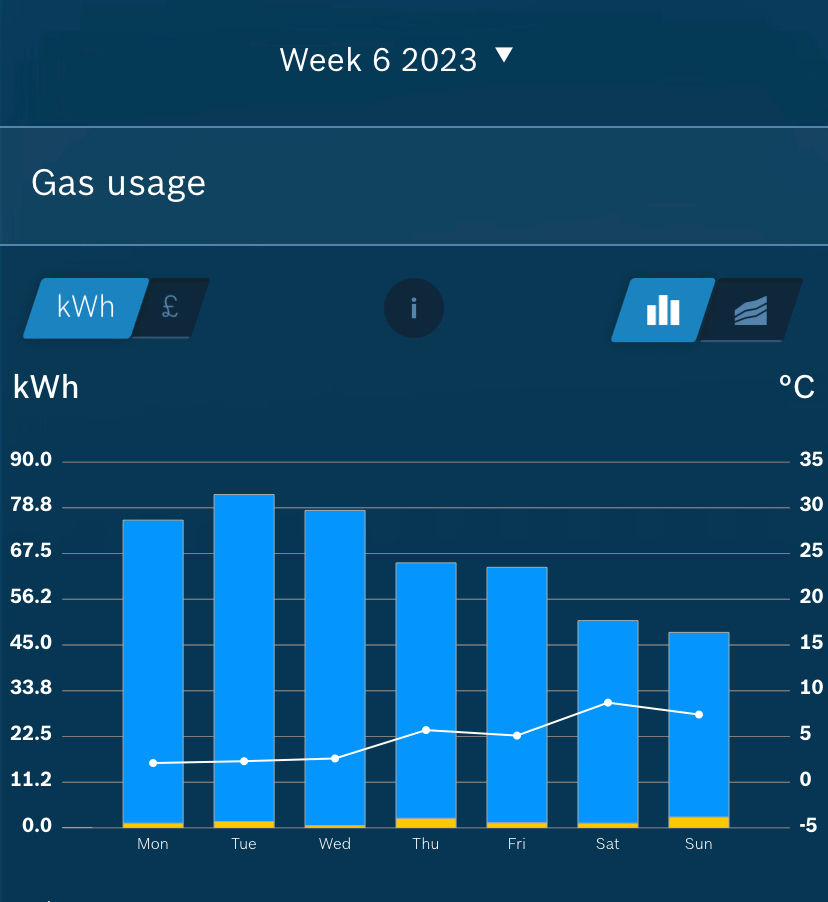
Energy use by day and outside temperature. 


There is an element of possible solar gain in play but again, I can take my solar PV stats to look at an approximation of that. 
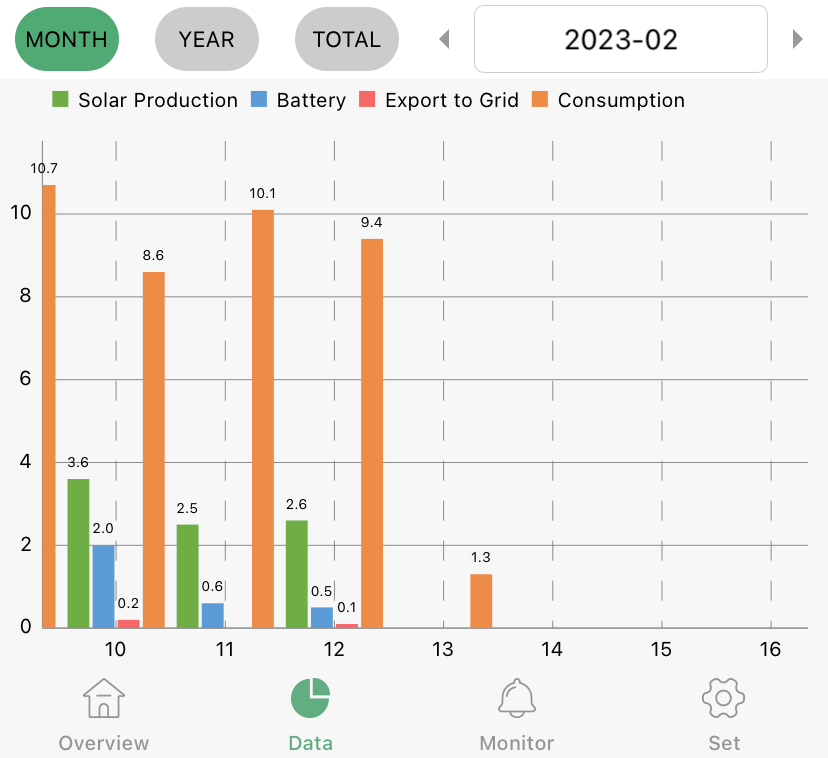
Daily solar generation. 

A few days probably isn’t enough to make a final judgement but at present I can see less energy use on a day when temperatures declined and the general comfort level was better. 
A little surprising given how we are led to believe that having weather compensation enabled is better. I know there are comments about avoiding ‘thermal shock’ to the system but that’s something else I’m not convinced about .. unless manufacturers are looking to reduce the robustness of these systems

 

29 replies

Taj
Rank 10
Rank 10
February 20, 2023

Hello @BPLightlog,

as I understand it it the pump is designed to be permanently running. This went against the grain for me, but it eventually sank in that for my modulating boiler the pump was already ‘permanently’ running. The only time it shut off was during the night when the set temperature was 14.5C and the room temperature was above 15C.

Is your room influence a tad high? Zero is no influence, and it increases from there.  I would guess that at 3 you’ve got maximum influence so minimum effective weather compensation. I do wonder about the effectiveness of room thermostats, setting up weather compensation is problematic enough without the room stats getting involved.

You are right, every house is different and what serves me will not work for others. You’ll have to discover what works for you, but don’t throw out weather compensation if you can help it. Treat it as a learning curve for heat pumps, unless you are my age you will almost certainly have one eventually and it will involve some form of low temperature heat exchange for rooms.

Tim_OVO
OVO Staff
OVO Forum Legend
February 21, 2023

Good discussion this, good to hear from you, @Taj - you’ve had 3 green tech badges added to your forum profile. Now we know what you have and that you might be able to share your learnings for someone following in your footsteps...

Carbon neutral - we need a community to get there! My green tech: Aclara SGM 1411-B smart meter, Chameleon IHD6
BPLightlog
Super User
Super User
March 2, 2023

So I’m at the end of another test week and it has all been very interesting. 
Caveat: I appreciate that my findings won’t necessarily work in another situation. 
 

The system now runs effectively without TRV’s in play. Weather compensation is also off although the gas boiler works by adjusting flow temperature presumably by load feedback. 
I have compared similar days, temperatures, people movement as best as I can and this appears to be the clearest indication 

The green line is the latest set up with no TRV and weather compensation disabled. 
The pink line is a similar day but with weather compensation enabled. 
While there are similarities, it’s the area under the curve which gives the energy used (lhs scale is kWh) and as such there is a significant reduction in energy consumption without wc but achieving the same heat level through the house. 
Perhaps the boiler on its own is a good controller along with the smart stat which provides the programmed temperature required. 
I calculate that I save around 12% of fuel without weather compensation enabled. The one thing wc does help with is on very cold mornings, the house gets up to temperature more quickly. Perhaps I can look into a modified control to switch on wc just overnight if the outside temperature is below -2 deg? I’ve started looking at an IFTTT app for that

Bring me Sunshine ~ E&E {Solar PV, Battery Storage, Hybrid EV, ASHP and Home Assistant automation}
Jeffus
Rank 20
Rank 20
March 2, 2023

The system now runs effectively without TRV’s in play. Weather compensation is also off although the gas boiler works by adjusting flow temperature presumably by load feedback. 
I have compared similar days, temperatures, people movement as best as I can and this appears to be the clearest indication 

The green line is the latest set up with no TRV and weather compensation disabled. 
The pink line is a similar day but with weather compensation enabled. 
While there are similarities, it’s the area under the curve which gives the energy used (lhs scale is kWh) and as such there is a significant reduction in energy consumption without wc but achieving the same heat level through the house. 
Perhaps the boiler on its own is a good controller along with the smart stat which provides the programmed temperature required. 
I calculate that I save around 12% of fuel without weather compensation enabled. The one thing wc does help with is on very cold mornings, the house gets up to temperature more quickly. Perhaps I can look into a modified control to switch on wc just overnight if the outside temperature is below -2 deg? I’ve started looking at an IFTTT app for that


Thanks for posting.

I wonder if without WC, the boiler is simply operating at a fixed flow temperature, what you are seeing is the boiler switching on and off?

With WC on a cold morning, the WC would kick in with a high flow temperature before falling back as the outside temperature increased? 

How did the house feel, was the temperature stable? 

I don't know what control you have of the weather compensation "curve" but perhaps try adjusting it given what you see in the graph? 


BPLightlog
Super User
Super User
March 3, 2023

...


I calculate that I save around 12% of fuel without weather compensation enabled. The one thing wc does help with is on very cold mornings, the house gets up to temperature more quickly. Perhaps I can look into a modified control to switch on wc just overnight if the outside temperature is below -2 deg? I’ve started looking at an IFTTT app for that

Thanks for posting.

I wonder if without WC, the boiler is simply operating at a fixed flow temperature, what you are seeing is the boiler switching on and off?

If I look at the boiler during the day, I can see that it ranges the temperature, presumably depending on the load. So it does vary up to the max that I’ve set.

With WC on a cold morning, the WC would kick in with a high flow temperature before falling back as the outside temperature increased? 

Yes - that’s my point about having WC on below certain outside temperatures for a start but then switching it out after the first hour or so.

How did the house feel, was the temperature stable? 

It was .. I was a little dubious about my own interpretation given my hand on the controls as such but I asked other family and they commented that the house felt more comfortable.

I don't know what control you have of the weather compensation "curve" but perhaps try adjusting it given what you see in the graph? 


I can only adjust the start and end point of the curve so am not sure how much control I can actually adjust.

It was just an interesting experiment in that most of the advice I’ve been given was weather compensation gives more cost savings but it is obviously dependant on the specific situation.

Bring me Sunshine ~ E&E {Solar PV, Battery Storage, Hybrid EV, ASHP and Home Assistant automation}
M.isterW
Rank 6
Rank 6
March 3, 2023

Thanks for posting this @BPLightlog . It's very interesting.


A number of people on heat pump forums have made efficiency gains by using the functionality built into the controllers rather than using weather compensation. The Mitsubishi controller, in particular, can often get better efficiency by using both internal and external temperatures to manage the flow temperature. You simply set the internal target temperature and it works out the most efficient way to achieve it.


Maybe the boiler and heat pump manufacturers are actually building systems designed to get maximum efficiency without needing lots of adjustment by the user.

1992 4 bed detached house. Solar PV + battery, Zappi EV charger, Mitsubishi Ecodan ASHP and i-life2 fan assisted radiators.... No gas 😊
BPLightlog
Super User
Super User
March 3, 2023

Thanks for posting this @BPLightlog . It's very interesting.


A number of people on heat pump forums have made efficiency gains by using the functionality built into the controllers rather than using weather compensation. The Mitsubishi controller, in particular, can often get better efficiency by using both internal and external temperatures to manage the flow temperature. You simply set the internal target temperature and it works out the most efficient way to achieve it.


Maybe the boiler and heat pump manufacturers are actually building systems designed to get maximum efficiency without needing lots of adjustment by the user.

I have come to that conclusion from gathering this info. The boiler is fairly new (2 years old) and I understood it to be built with energy saving in mind. It’s a combi, condensing version and does adjust flow temperature as mentioned earlier. But like other areas of newer technology, there seems little in the way of useful information from manufacturers about how to maximise the built in capabilities. 
I appreciate that my room layout being mostly open plan might be quite different to others but a few suggestions on a few variations would have been useful. 

Bring me Sunshine ~ E&E {Solar PV, Battery Storage, Hybrid EV, ASHP and Home Assistant automation}
Rank 2
January 24, 2024

We have a similar setup, but only using a Bosch EasyControl.  It has been set up by ‘trial and error’ and a bit of internet help. There is plenty of room for error and very little help from Bosch.

We use a room influence of 2, found as recommended by Bosch engineer on internet,

living area day temperature 19 C,

and a night threshold of 15 C, we don’t like it too hot, but again Bosch recommend keeping the house ‘fabric’ at a minimum of 15C. Keeping the ‘fabric temperature’ up does seem to make the house more comfortable, presumably the effect of radiated heat.

The curve is still being tweaked, it’s working reasonably well, but have yet to test it at the extremes. 

I would not rely on day to day variation in consumption, there are far too many variables and lag in the system. I often see these effects, no system changes, but a warmer day using more energy than the previous cold day and this applied pre weather compensation. On our system we seem to see a gain when comparing equivalent monthly data, but as the boiler is already ‘smart’ we expect the gains are going to be small.


I also have the Bosch easy control and with so many different circumstances it’s unique to the property where installed. I have a Worcester 30cdi and was struggling with the boiler operation (short cycling) after endlessly looking for an answer I found the sweet spot.

What worked with my set up was to range rate the boiler to match the heat demand or just above, yes I know you shouldn’t have to as it’s a modulating boiler but hear me out. I had also noticed that in my area the internet based outdoor temperature was out sometimes by 4/5 degrees, so I fitted an outdoor sensor to a north facing wall. My room influence setting was on two (medium influence) but the system was still not quite right, the below settings made all the difference.

Range rate boiler ( 30kw to 11kw with my demand)

Outdoor sensor (made a big difference)

Hot water off — (combi only)

Easy control temp — 18.5 degrees

Room influence— None (0) Off  (Given time stopped boiler cycling with the aid of range rating)

Heat curve      —  20 / 82

max flow temperature 75 degrees (although it rarely gets above 65)

Optimisation — on (although this will operate the boiler an hour or two before set start time)

Clock Times —  6am through to 10pm @ 18.5 degrees  (bedrooms @16,5 degrees, zoned)

Night time set back — 12 degrees 

Summer set Back — 16 degrees 

I have the Bosch smart Trv’s that are set to automatic hydraulic balancing, manual Trv’s I would assume be left wide open until the system settles down enabling you to adjust to your needs (bedrooms)

Since making the adjustments the heating has taken on a very noticeable difference with comfort and economy, keep in mind that any adjustment will take time to adjust (allow a day or two).

My system will now return a comfortable indoor temperature, plus being on for approximately 16 hours a day (and when I say on the boiler will only top up when needed).

Although this goes against all recommendations for saving gas, in fact with my circumstance it works out cheaper to leave it on for longer spells as recommended by the manufacturer.


Tim_OVO
OVO Staff
OVO Forum Legend
January 26, 2024

Great results, @Simon.p 


You might find this similar topic posted by the like minded @BeePee worth a look and consider sharing this there:


Carbon neutral - we need a community to get there! My green tech: Aclara SGM 1411-B smart meter, Chameleon IHD6