


Rank 2
January 7, 2025
Solved

I have FIT with new battery and inverter, do I have the right meters?
  • January 7, 2025
  • 79 replies
  • 2855 views

Wondered if anyone can answer my query


Im an existing FIT payment receiver (solar panels installed with single string inverter 11 years ago) so receive a decent FIT payment.


Recently had installed a EcoFlow 3.6kw inverter with 10kw battery storage, the generation meter was changed to a bidirectional meter as instructed and followed the correct schematic.


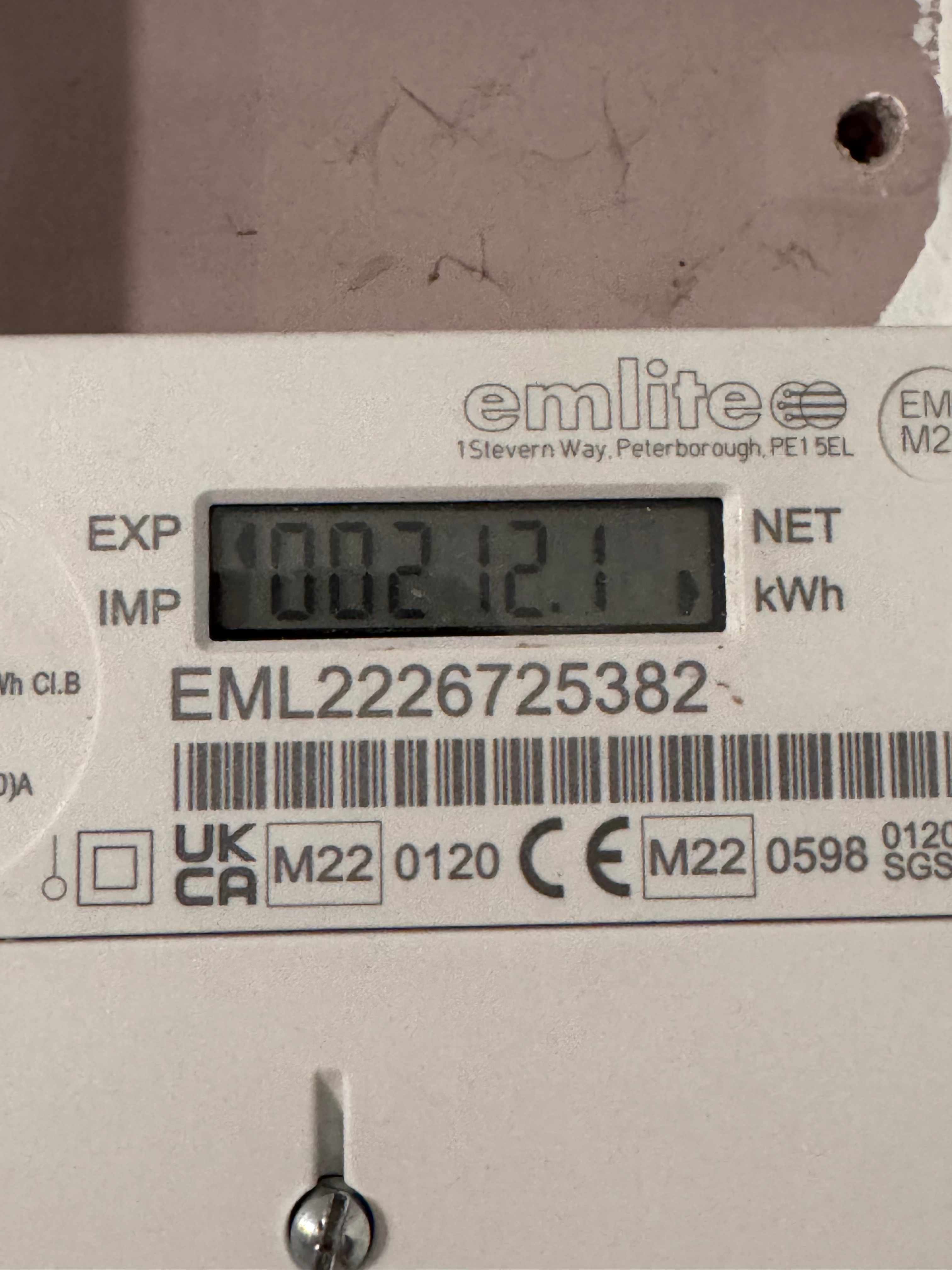
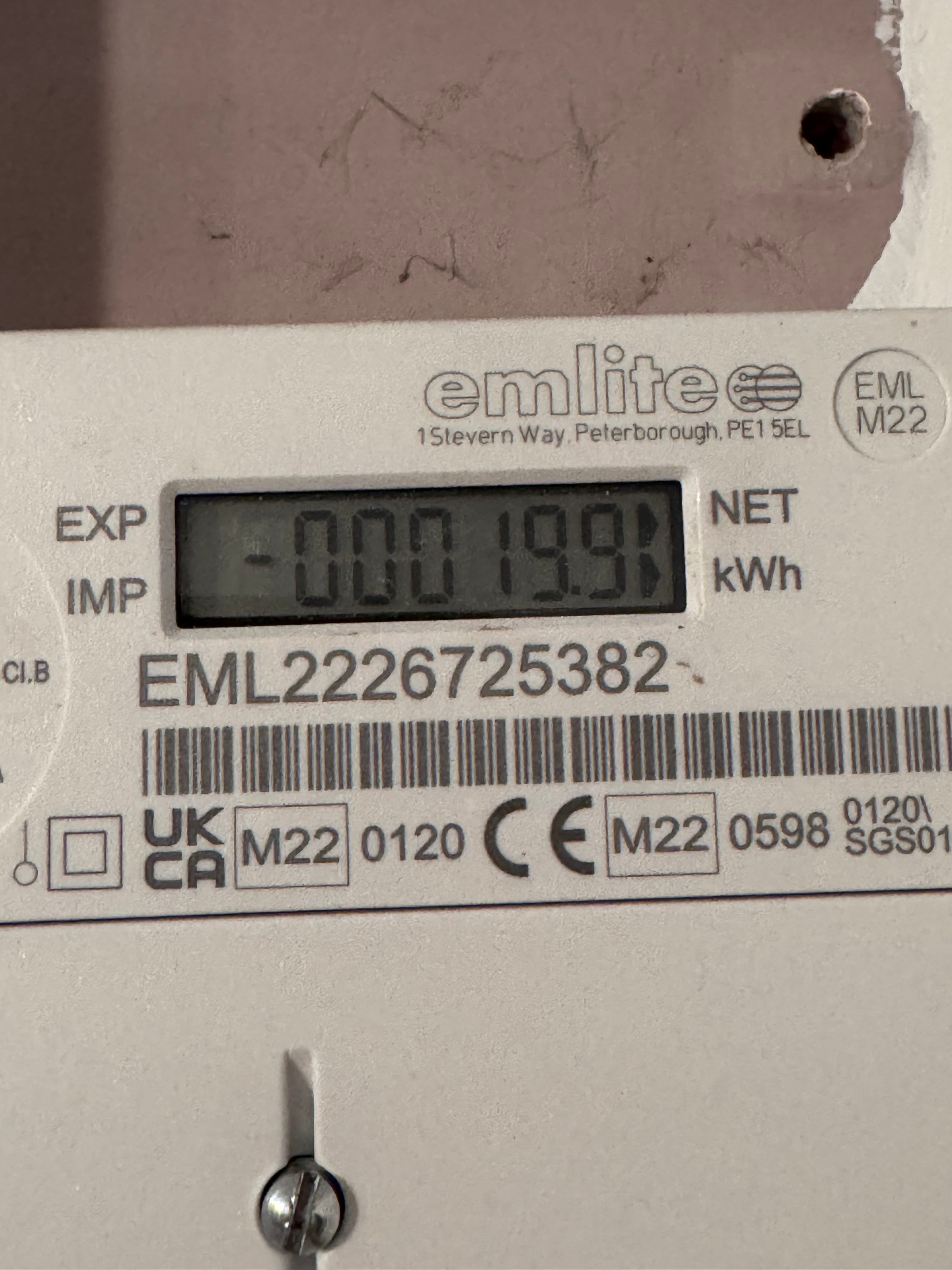
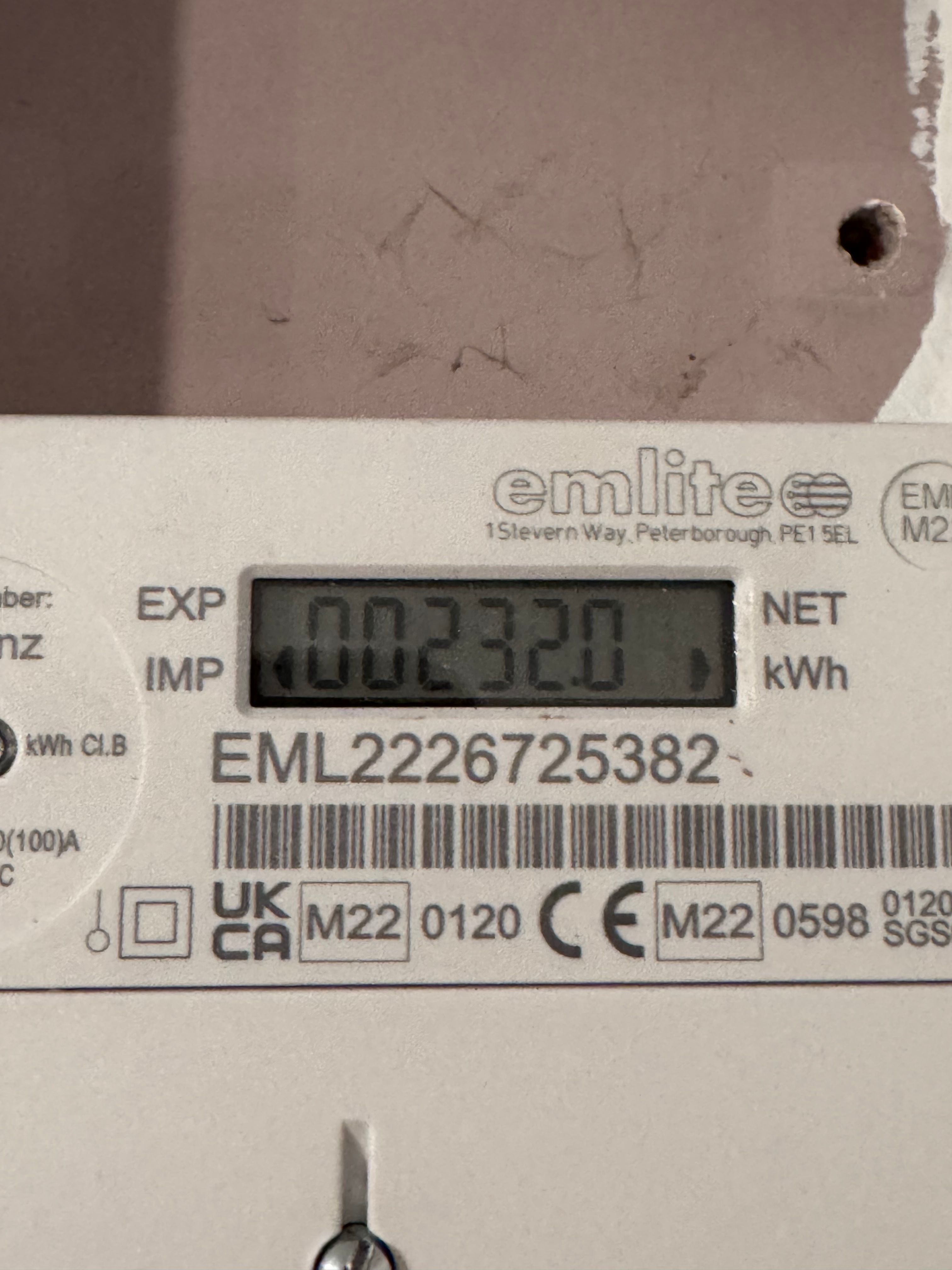
However the meter is showing a negative number and I can’t seem to work out what the solar panels are generating apart from what shows in the EcoFlow app


We charge the batteries up at night using an off peak rate and then any solar during the day tops the batteries up.


am I correct in thinking there should be another meter of sort between the solar panels and inverter just to monitor the generation from The solar panels?


installers seem to think by summer it will change to a positive but that’s no good to me right now when I’ve generated about 30kw of solar 



Best answer by BPLightlog

Actually, the NET meter is normally the correct one to use. It calculates the difference between any import from the grid and your generation. During winter and acknowledging losses in the system, if you are significantly charging overnight and then discharging during the day, it can show negative at this time of year. 
You might just double check with your FIT provider as to which reading they will accept. As I mentioned, normally it’s the NET reading but some want the EXP reading. 
There will be no other meter just for generation on a set up like yours (mine is the same)

79 replies

Newcomer
September 15, 2025

Unfortunately for FIT generation, it doesn’t include anything supplied via the batteries, hence the net generation meter and your calculations.

If you read several posts earlier in this thread, you will see that there is a suggestion about having things rewired so that the battery doesn’t pass through the generation meter. It’s either that or being very careful what you charge and reuse.

Thanks for your super quick reply. Is it easy to have battery not pass thru meter and is it allowed? And would i still be able to charge the battery from solar generation and from grid?

 Thanks once again

Did you not get things changed/updated as you were intending earlier? Or has that not made any difference?

Thanks for the help everyone.. my installer is gonna change the meter in a couple of days.

If you can get a reply from ​@kanulondon that might be the best help as they seem to have got their system sorted now

Yes my meter was wired correctly but its only now suns out less that i charged my battery on cheap night rate and realised it comes off your export.

It’s not a matter of wired correctly, it’s whether you as the customer were aware that the current wiring isn’t optimal from a FIT perspective


I believe ​@David49 had his incorrectly wired but most others weren't aware of the loss in FIT using a single AC/DC inverter. I certainly wasn’t..

Newcomer
September 15, 2025

Unfortunately for FIT generation, it doesn’t include anything supplied via the batteries, hence the net generation meter and your calculations.

If you read several posts earlier in this thread, you will see that there is a suggestion about having things rewired so that the battery doesn’t pass through the generation meter. It’s either that or being very careful what you charge and reuse.

Thanks for your super quick reply. Is it easy to have battery not pass thru meter and is it allowed? And would i still be able to charge the battery from solar generation and from grid?

 Thanks once again

Did you not get things changed/updated as you were intending earlier? Or has that not made any difference?

Thanks for the help everyone.. my installer is gonna change the meter in a couple of days.

If you can get a reply from ​@kanulondon that might be the best help as they seem to have got their system sorted now


Good to see this thread is still helping people… I am fully sorted now and compliant. However it cost me a few hundred pounds as I have effectively had to re-install a simple string inverter and that’s on the end of my new bi directional meter...(in hindsight I didn’t need to change the meter had it all been wired correctly!)

What I had before (sub optimal if on FIT!)

Circuit A (Consumer Board) <> Bi Directional Meter <> AC/DC Inverter <> Batteries + Solar Panels

A quick mock up of what I have now (optimal if on FIT)

Circuit A (Consumer Board) <> Bi Directional Meter <> String Inverter with Solar Panels

Circuit B (Consumer Board) <> AC/DC Inverter (runs in AC) <> Battery Bank


As you can see the bi directional meter never sees any demand, only export of the energy. If there is surplus from the panels, my Inverter will detect and charge the batteries. I now charge the batteries at night with careless abandon to 80% as it will NEVER affect my FIT as it did before


KL

Is that the cheapest way to get around this problem....I was hoping I could just take a battery wire out out the inverter.😁

Newcomer
September 17, 2025

Sorry to keep this thread going.I'm still a bit confused by this. I'm the same as other users ,on old fit payments from solar installed 12 years ago,just had inverter replaced with hybrid and a battery plus new bidirectional meter.On fit I get paid for everything I generate from solar but now your saying if I charge the battery from the grid that gets taken off my solar generated figure..is this correct? But not the rest of my grid use for the house? Thanks in advance.

If you have a bi-directional (net) meter, it is most usually wired to record generation used directly by the house and also any that is diverted to batteries (which you would expect as that has been generated as well).

However, if you charge the batteries from the grid, this will be seen as imported and deducted from the total reading as that part was not generated. Hence the Import, Export and Net readings.

The problem with this is that if you use significant grid charging , especially during winter months, as the battery is probably only 80-90% efficient, it will significantly reduce your Net readings during that period.

You can see from earlier posts that some have had things rewired so that the meter only shows generation direct and ignores any used by the batteries. 

I now think I've noticed that when im using battery energy that is going back on generated export meter, is that right...it seems to be and then that doesn't make it as bad as I first thought.

BPLightlog
Super User
Super User
September 17, 2025

I now think I've noticed that when im using battery energy that is going back on generated export meter, is that right...it seems to be and then that doesn't make it as bad as I first thought.

If part of your solar/battery goes to export, that’s normal but not the same as generated. Only generated counts for FIT (except if you also have an export tariff). Not all battery supply goes to export (or shouldn’t).

If you’re on SEG rather than FIT then you don’t need to bother with a generation meter. 
 

Edit - are you talking about the Export reading on your bi-directional meter? If so, then yes, your battery output adds to this figure. The problem is that any input from the grid adds to the Import figure and this will be a higher number than the Export. (You never get as much out of the batteries as you put in). Therefore your Net figure can decrease and this is the reading that your FIT provider needs

Bring me Sunshine ~ E&E {Solar PV, Battery Storage, Hybrid EV, ASHP and Home Assistant automation}
Newcomer
September 17, 2025

I now think I've noticed that when im using battery energy that is going back on generated export meter, is that right...it seems to be and then that doesn't make it as bad as I first thought.

If part of your solar/battery goes to export, that’s normal but not the same as generated. Only generated counts for FIT (except if you also have an export tariff). Not all battery supply goes to export (or shouldn’t).

If you’re on SEG rather than FIT then you don’t need to bother with a generation meter. 
 

Edit - are you talking about the Export reading on your bi-directional meter? If so, then yes, your battery output adds to this figure. The problem is that any input from the grid adds to the Import figure and this will be a higher number than the Export. (You never get as much out of the batteries as you put in). Therefore your Net figure can decrease and this is the reading that your FIT provider needs

Yes im talking about bidirectional meter, I never realised the battery being used counts towards export , and losing a few k/w is better than I first thought happened. So one final question, if my panels generate 20k/w in a day but 10k/w goes into the battery, im presuming the 20kw goes on the export but then when I use the battery thats added to the export as well, so therefore your getting paid twice for that. Is that correct. Thanks for your informative help BPLightlog 

BPLightlog
Super User
Super User
September 17, 2025

Yes im talking about bidirectional meter, I never realised the battery being used counts towards export , and losing a few k/w is better than I first thought happened. So one final question, if my panels generate 20k/w in a day but 10k/w goes into the battery, im presuming the 20kw goes on the export but then when I use the battery thats added to the export as well, so therefore your getting paid twice for that. Is that correct. Thanks for your informative help BPLightlog 

Unfortunately not.

The export reading on the bi-directional meter only counts what is ‘used’ and therefore whatever goes into the battery doesn’t add anything to that until it gets used - hence you ‘lose’ a little from the losses in the system when whatever is in the battery gets used.

Bring me Sunshine ~ E&E {Solar PV, Battery Storage, Hybrid EV, ASHP and Home Assistant automation}
Newcomer
September 17, 2025

Yes im talking about bidirectional meter, I never realised the battery being used counts towards export , and losing a few k/w is better than I first thought happened. So one final question, if my panels generate 20k/w in a day but 10k/w goes into the battery, im presuming the 20kw goes on the export but then when I use the battery thats added to the export as well, so therefore your getting paid twice for that. Is that correct. Thanks for your informative help BPLightlog 

Unfortunately not.

The export reading on the bi-directional meter only counts what is ‘used’ and therefore whatever goes into the battery doesn’t add anything to that until it gets used - hence you ‘lose’ a little from the losses in the system when whatever is in the battery gets used.

Thank you, I've only had my battery 5 months and finally know how if works. Thanks for your help.

Newcomer
September 22, 2025

Yes im talking about bidirectional meter, I never realised the battery being used counts towards export , and losing a few k/w is better than I first thought happened. So one final question, if my panels generate 20k/w in a day but 10k/w goes into the battery, im presuming the 20kw goes on the export but then when I use the battery thats added to the export as well, so therefore your getting paid twice for that. Is that correct. Thanks for your informative help BPLightlog 

Unfortunately not.

The export reading on the bi-directional meter only counts what is ‘used’ and therefore whatever goes into the battery doesn’t add anything to that until it gets used - hence you ‘lose’ a little from the losses in the system when whatever is in the battery gets used.

Thank you, I've only had my battery 5 months and finally know how if works. Thanks for your help.

Good chat here. ​@ScottyWigan  just be aware you may think it's only a few KWs here and there but if you recharge your batteries to 90 or 100% during autumn and winter you'll put quite a dent into your export meter reading and it's quite normal for it to effectively go down /backwards as the bi directional meter export side isn't fixed.


Summer is fine as you're always generating plenty and some folks turn off ac battery charging altogether. But the batteries are there to be used so I take advantage of the cheap rate overnight of 7p and charge to 90%. Only FIT we don't get paid for export just generation. 


If you're bored you can probably work out your losses and try and predict how much FIT you may lose running everything off the one inverter 


KL

Ben_OVO
Community Manager
Community Manager
September 23, 2025

Thanks so much for all your help here ​@BPLightlog ​@David49 and ​@kanulondon, great work 😁.


@Brimar23 I’ve added the Energy Storage and Solar badges to your Forum account. I’m sorry to hear of the issues you’ve been having and I hope Ofgem can help you get this all resolved. 


@ScottyWigan I’m happy you’ve got more of an understanding now about the battery.

Powered by the Sun
Newcomer
February 19, 2026

Hi All, I have joined this forum, to try and get my head around this same issue, It appears to be very complicated and I would just like someone to explain in simple terms for me.


I had a FIT installation for which I get 20.38p per Kwh generated and 7.39p deemed export. 

I have just had the following installed 3 days ago.

11 Aiko Panels 475w, Sigenergy, 10kw batterys x 2 and sigenergy 8kw Inverter.


I know its not the best time for producing solar but in the last 2 days I have produced 9.57kwh shown in the app.

I have been charging 100% overnight at 15.8p per kwh on Octopus flux this gets me through the day to around 20:00 when it goes back onto the normal rate of 26.34p per kwh, I am not yet able to export anything to the grid, although I do have an export MPAN which Octopus are setting up on my meter.


My New meter is bi-directional, and currently shows Imp 52.6kwh ; Exp 41.8 kwh : Net -10.7


Do I need to get this rewired so that I do not have a minus for my Fit ? or do I stop charging altogether and leave the battery at 12% where it is now and just pay the normal daytime rate.


Any help would be very appriciated