




Tim_OVO
OVO Staff
OVO Forum Legend
December 17, 2021
Share your experience

Energy storage vs heat batteries: what's the difference and which is better?
  • December 17, 2021
  • 18 replies
  • 7753 views
Energy storage vs heat batteries: what's the difference and which is better?

Updated on 03/07/26 by Abby_OVO 


Storage batteries for your home - which is best?


Our content team helped us outline different types of domestic storage. Here’s our summary:


Lithium-ion batteries

Most home batteries in use right now are powered by Lithium-ion, the same substance that’s been used to make many commercial batteries. 

  • Pros: They’re lighter and more compact than other electrochemical batteries, and will also last longer.
  • Cons: As mentioned above, Lithium-ion is expensive, and it’s also a finite resource – so it’s not the most environmentally-friendly option. 

Lead-acid batteries

These work similarly to Lithium-ion batteries, but there are a couple of key differences. 

  • Pros: These are a slightly cheaper option than Lithium-ion.
  • Cons: They have a shorter lifespan than Lithium-ion batteries, while being less environmentally-friendly than heat and saltwater batteries.

Saltwater batteries

The new kid on the block of home battery tech, saltwater batteries don’t use any heavy metals. Instead, they rely on – you guessed it – saltwater, and its natural electrolytes.

  • Pros: These are very green, and easily recycled (unlike Lithium-ion or lead-acid).
  • Cons: As they’re so new to the market, saltwater batteries are still untested long-term. 

Heat batteries or thermal stores

These are both ways of storing energy as heat. While thermal stores are more like your trusty old hot water tank, heat batteries are their cool younger sibling: they’re sleek, small, and hold on to heat for longer. 

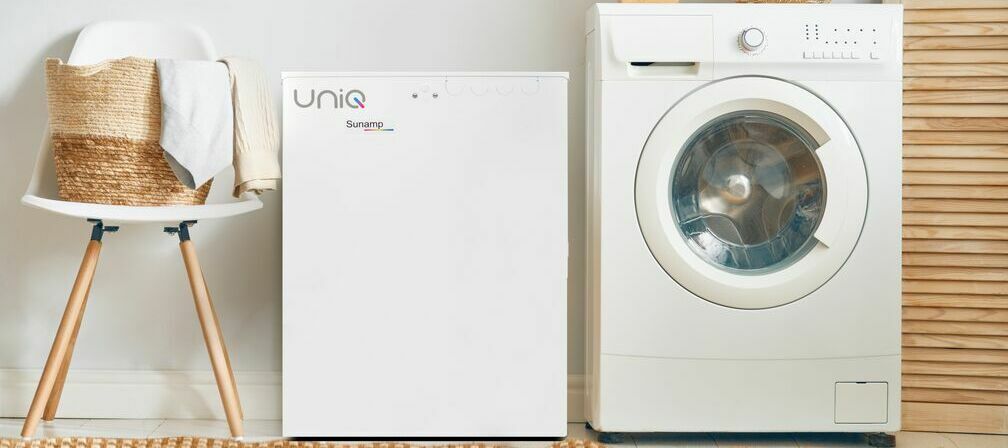
Sunamp UniQ heat batteries are perhaps the most compact example out there. 

  • Pros: These clever systems can take the place of a regular hot water tank – and in the case of heat batteries, they’ll take up less space, too! They’re super-environmentally-friendly, and won’t lose heat to their surroundings. Oh, and they’re cheaper than electricity batteries, too.
  • Cons: These can get pretty hot to the touch, so you have to be careful. But, all things considered, they’re a great option for your home.


We’re a community of green tech adopters, and on top of that, OVO are involved in trials of low carbon, green tech, including some involving Lithium-ion batteries and heat batteries. We’re keen to hear from trialists with first hand experience of this tech!


If we start with Lithium-ion batteries, @Transparent @jenthomson @Heatherd @dnshorto @chrisjw37 @mrmhf @Llamedospete @Mark C @malc_smith @Graham110011 @Sean T @JoeC @f0rtune @timciren @osborner @Bev - I’d like tap into your first hand experience by sharing what you feel are the advantages and disadvantages of this storage technology? Imagine I’m trying to choose between which type of storage to invest in, or whether to invest at all. What what you advise me? 


Let me reach out to our Heat battery trialists are ask you the same question. @hambrook @Nicllb @M.isterW, would you recommend your type of heat battery to me over an alternative? 


Share your knowledge, share your experience, and help us to debunk some myths! 

18 replies

Newcomer
December 22, 2021

I know they’re relatively new. Perhaps are light on the software development function at the moment (we ain’t cheap). I know they got some investment recently so they really should be spending on that area pretty soon or, as you imply, they’re making a significant strategic error.

3.2kWp Solar, Sonnen 5kWh Battery (OVO trial), Kia e-Niro, Evohome TRV's, Triple Glazing, Home Assistant
Newcomer
January 3, 2022

Ok… so relatively new to Lithium Battery storage for the house. Have a Sonnen 5Kwh system (and a 75kwh Tesla car but that’s a different story). 

Advantages - Electricity is the most usable form of energy for cooking, heating, lighting, run computers etc. I guess it’s pretty efficient at returning most of the power stored.

Disadvantages - Electricity is relatively expensive compared to primary energy (Solar heat, or gas), so unless you are charging from Solar PV it does not make sense to use it for heat.

Pretty much the battery is maintenance free. It just sits in the garage and supplies electricity when it needs to. To actually find out if it’s done anything I have to look at the app!

Future plans may change that balance of cost if OVO offered lower cost off peak electricity to fill the battery (e.g. like Drive plus anytime), where they that potentially surplus wind/solar energy from other sources and push it into the battery to offset at a later time (e.g. like the old storage heaters overnight).  That could both offer the owner of the battery much cheaper electricity and potentially also keep the peak costs down, reducing the average prices as well.


BPLightlog
Super User
Super User
February 7, 2022

We have recently installed Li-ion battery storage to support our PV solar system. Although there is a future consideration about disposal of the cells, this is the same technology in use in modern EV builds as well as powering virtually all smartphones and other household electronics. 
A 7.8kW system allows us to take advantage of the generation more effectively and is small and light enough for domestic use. 
The system installed also allows a modified consumption pattern, charging at off-peak times and flattening the load level locally (if only OVO would let me use off-peak!)

With a 10 year warranty on the technology in use, this seems to me to be the next level (after solar PV) in domestic power systems

Bring me Sunshine ~ E&E {Solar PV, Battery Storage, Hybrid EV, ASHP and Home Assistant automation}
Rank 2
April 2, 2022

Like @hambrook we are a Tesla household when it comes to batteries. We have one 13.5kW Powerwall (and a 70kW Model S on the drive).

I won’t repeat what @hambrook has already written! Although lithium-ion technology uses a finite resource, we felt by choosing a reliable brand when installing our Powerwall (early 2021), we were less likely to get rid of it before it came to the end of its natural life.

We have had our Tesla for 6 years now (registered spring 2016) and it has done 120,000 miles so far with no significant loss of storage and this gave us great confidence when choosing the Powerwall. Octopus offer a Tesla Energy Plan for those with solar PV, a Powerwall and a Tesla car and this was the most significant financial incentive over other companies. The Tesla Energy Plan essentially hands control of the Powerwall to Octopus - we can’t choose when to store energy or use it (on average, their system stores energy into the battery at night and discharges back to the grid at 4pm).

We also considered Powervault batteries - these are ‘second life’ home storage batteries that were originally in Nissan and Renault EVs. The modular nature with easy storage increase was tempting, but when compared with the 13.5kW storage of the Tesla Powerwall, the maths didn’t stack up for us. The sustainability side of Powervault is definitely better than Tesla though.

Jess_OVO
OVO Staff
OVO Staff
April 4, 2022

Some really interesting points raised here, @jenthomson.


Particularly in stacking up the sustainability aspects of each battery model with the price/efficiency. 


Was this a major consideration for others when choosing your energy storage solutions? @BPLightlog , @malc_smith , @JoeC, @Heatherd  

Powered by Re-knowable Energy!
Newcomer
April 4, 2022

I am with ovo. I charge at night during winter. i have e7. My enphase allows me to do this.

BPLightlog
Super User
Super User
April 29, 2022

Some really interesting points raised here, @jenthomson.


Particularly in stacking up the sustainability aspects of each battery model with the price/efficiency. 


Was this a major consideration for others when choosing your energy storage solutions? @BPLightlog , @malc_smith , @JoeC@Heatherd  

While we look forward to EV in the future, we currently use a hybrid but certainly there is a consideration of off peak supply to be available either directly or via storage systems. 
As the current grid will struggle to supply a full EV overnight demand, it would seem practical for suppliers to promote off peak use. 

Bring me Sunshine ~ E&E {Solar PV, Battery Storage, Hybrid EV, ASHP and Home Assistant automation}
BPLightlog
Super User
Super User
November 19, 2022

Some really interesting points raised here, @jenthomson.


Particularly in stacking up the sustainability aspects of each battery model with the price/efficiency. 


Was this a major consideration for others when choosing your energy storage solutions? @BPLightlog , @malc_smith , @JoeC@Heatherd  

While we look forward to EV in the future, we currently use a hybrid but certainly there is a consideration of off peak supply to be available either directly or via storage systems. 
As the current grid will struggle to supply a full EV overnight demand, it would seem practical for suppliers to promote off peak use. 

It’s interesting coming back to this thread in the current climate. Although I’m not on a current ‘reduction’ trial, I have been experimenting with a series of controls to see how we could use solar+battery to move energy use out of peak hours. It takes a bit of juggling as some systems (including ours) don’t power all appliances and especially if several are turned on at once. 
One part of the solution is to know what is on, when so the IHD comes into its own coupled with a feed from the solar system to see what’s available. A more portable IHD would be useful (better battery).

Secondly encouraging some of the heavy consumption out of peak, especially with a busy household. 
I’m on the look out for an ‘all-in-one’ data screen which would be perfect (I hear the ivie bud gives some of this with the integration of solar indication at least). 
Yesterday (mid Nov) we were able to use no electrical power between 4 and 7 with only the 9kw shower banned during this time. An air fryer helps cooking a lot and regular nudges to the others makes them check what’s already on before they switch kettles, microwaves, hairdryers or heaters to on also. A check on forecast CO2 levels also allows the move of battery charging which coupled with a careful use during the rest of the day completes the process. 

Bring me Sunshine ~ E&E {Solar PV, Battery Storage, Hybrid EV, ASHP and Home Assistant automation}