


Question

200kwh in one week?

  • January 25, 2026
  • 5 replies
  • 105 views

We've recently moved to an apartment 10 days ago. Looks like its an all electric apartment. We only have one heater on and its set at 15-16C. We only cook(induction) once a day and have only used the washing machine three times. But based on the smart meter readings we are averaging 30+ kwh per day. We've kept heating to a minimum (just the bedroom heater is on), no heating in living room at all. No other appliances like TV is used. I have a laptop that I charge for approx 2 hours then unplugged for the rest of the day. 

The apartment is on Economy 7 so the smart meter give 2 readings. From Jan 12 to 15, no one is in the apartment but still there's electric consumption of approx 5kwh per day.  My previous apartment I only consumed approx 150kwh per month so I'm confused as to why I used 200kwh for one week. 

Is there any reason for this? Maybe the meter is faulty?  

5 replies

Firedog
Super User
Forum|alt.badge.img+7
  • Super User
  • January 25, 2026

I’m afraid that your alarming figures are quite possibly correct. 

  • If your tariff is Economy 7, it’s likely that your heater is of the night-storage variety, meaning that it is designed to heat up its core overnight at a lower price, then release the stored heat during the daytime.
  • A bedroom-sized night-storage heater (NSH) could be rated at 1.8kW. If it runs for all seven hours each night, it could consume 80-90kWh each week. 
  • You haven’t mentioned hot water. It’s most often the case with Economy 7 systems that hot water is provided by an immersion heater which operates in the same way, i.e. it only heats up at night at the lower price. Immersion heaters are often rated at 3kW, so running one each night for  3-4 hours could amount to another 70kWh a week.
  • Many all-electric apartments make use of electric showers. These are very power-hungry, often drawing 8-10kW, so a ten-minute shower could use 1.5kWh. One shower like this a day adds up to another 10kWh a week, most probably at the higher price. 
  • If your heater(s) aren’t NSH at all, but direct ones giving more or less instant heat, you will be paying the higher Economy 7 price for them. That way lies financial ruin.

If you tell us a bit more about what equipment you have, we could be more specific. It’s appliances that involve heating that have the biggest impact - space and water heaters, tumble dryers, cookers, hair dryers, irons and so on. The more details you give, the better.

It is very unlikely that there’s anything wrong with the meter - that would be the last on a long list of things to check. 


  • Author
  • Rank 1
  • January 25, 2026

There's a huge tank near the bathroom and it looks like its one of those immersion heater you've mentioned. Is it recommended go just have this switched on when needed? Or does it need to be on all the time? 

Not sure if we have the NSH. In the same cupboard as the tank, there's a huge plastic container with a lot of plumbing attached to it. Could that be the NSH? If so, is it recommended to just switch it on when needed as well? 

We have an electric shower that we use approx 3 times per day (total 20 mins), which the same as our previous apartment where we paid a lot less in one week. So maybe its not that? Shower heater is Triton T80.

The heater in the bedroom looks like one of those heater that has a timer once it reaches a certain temp, and its the only one that is constantly on and set at 15C. ( Stiebel Eltron CNS 150) 

Other equipment we use:

Induction cooker - Lamona (HJA 3300 i think) only used this approx 2 hours per day

Cooker hood - Lamona HJA2450 approx same time as cooker

Indesit IWDC6125 washing machine - twice per week on eco time 

Lec fridge+freezer (not sure what model) - used constantly but set at less than 1 on the fridge setting

Rice cooker - used once per day

Kettle - once per day 

Heater fan - approx 2 hours per day 

Hair dryer - once a day (5 mins max)


We did an experiment on the meter. Turn the fuse box off and left the apartment for 3 hours. No changes in the meter reading. So I guess its not a faulty meter. 


Firedog
Super User
Forum|alt.badge.img+7
  • Super User
  • January 25, 2026

Thanks for those details.

As far as I can see, the Stiebel Eltron CNS 150 isn’t a storage heater - just a fancy panel heater which will run at the higher price during the day. If it’s on all the time, trusting to the thermostat to moderate its consumption, it will depend very much on how well insulated the room it’s in is how much it will cost to run. In any case, it’s a very expensive way to keep warm.

There are many versions of the Triton T80 electric shower, but you can be sure that 20 minutes’-worth of showers a day will use about 3kWh. That’s over 20kWh a week just for showers. 

When you moved in, you should have contacted whoever was supplying electricity to the apartment - OVO, perhaps? - to advise them that you’d moved in and giving the first meter readings. Did you do that? The supplier will have responded with account details and the tariff you’ll be on initially. That’s where you can see the unit costs that will be used for billing. That will show you how much more expensive it is to run a heater or an electric shower by day or during the offpeak hours at night.    

If you could post a couple of photos of the “plastic container with a lot of plumbing attached” and of your meter, we might be able to come up with more suggestions.


Forum|alt.badge.img+1
  • Rank 8
  • January 26, 2026

The Triton T80 electric shower typically uses between 7.5kW and 10.5kW per hour

Lamona induction hobs are highly efficient, typically using 1.5kW - 2kW per hour

Cooker hoods use very little electricity

The Indesit IWDC6125 washing machine is a washing machine that will also dry your clothes. Washing only uses 1.05 kWh to 1.12 kWh per washing cycle. If you use the dryer it will use around 4.86 kWh per washing and drying cycle. 

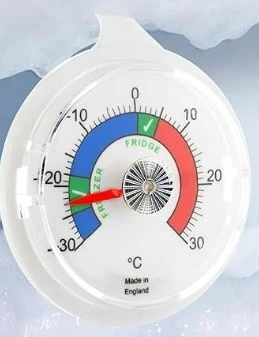
When it comes to fridges and freezers, for food safety. a fridge and freezer thermometer is a good idea.

These show the safest temperatures for each. We have to change our temperature dials depending on whether it is summer or winter. Keeping your fridge and freezer at the best safe temperature makes it more efficient as it does not need to come on so often. It is also more efficient to keep a freezer almost full. This will lower the cost. 

Do you have any instructions for your hot water heating? Are you able to control how long it is on each night (assuming that it is connected to the Economy 7 part of your meter)? Is there a switch that allows you to turn on the immersion heater during the day and have it heat up water, if needed? As you do not appear to have Night Storage Heaters, I wonder if Economy 7 is the correct tariff for you, anyway. There is usually quite a difference in cost for electricity used during the day when compared with the cost of electricity used overnight when you are on an Economy 7 tariff.


Ben_OVO
Community Manager
Forum|alt.badge.img+4
  • Community Manager
  • January 26, 2026

@K_Liliana thanks for your post - I can understand the feelings of frustration when it’s unclear exactly what’s causing higher-than-expected usage.


I can see ​@Firedog and ​@Bendog have come by with some fantastic info for you, and we look forward to hearing back from you with further answers to their questions. 


Unfortunately, it’s very common for electric-only properties to use a lot of power and, in general, to end up being more expensive than properties with gas central heating. This is due to the fact that electricity is more expensive, and that electric radiators and water heaters generally use a lot of power. It’s most likely that the vast majority of your usage is going towards heating and hot water, as has already been suggested in this thread. We’ll wait to hear back from you with thew photos before advising you further. We’ve got a really helpful community here, and we’ll do our best to help you get the usage / costs down.


After you’ve been at the property for a few months I’d recommend reaching out to our Support Team and asking them to calculate whether it’d be better for you to be on a single rate plan (the same unit rate the whole day) rather than Economy 7. However, it may be that, even if your radiators aren’t storage heaters, your water heater is automatically coming on during the cheaper, off-peak time. This post explains more about Economy 7 set-ups like yours: