



Our EV adventure in Spain part 2: Learning to charge abroad
Missed part 1? Follow the link below:
Having planned the entire route using ABRP (plus a few manual tweaks) I used Google Maps to familiarise myself with the actual location of each of the stops, and placed the little man on the map so that I had a mental image of the final steps. This helped a lot as we approached each stop. I also created a “co-pilot” information sheet so that my wife could identify certain landmarks as we came closer to the destination.
I highly recommend getting an Emovis Tag, also known as Bip-and-Drive. You need the VIA-T tag for Spain. This allows you to pass through the motorway toll gates without having to faff around with credit cards, which can be particularly tricky since our UK cars having the steering wheel on the other side, and the payment machine is on the passenger side. It’s quite amusing when you approach the toll gates, and some speedy Gonzales passes you in an attempt to get through the gates first, only to find that your Bip-and-Drive device automatically raises the barrier as you approach, and you’re away first while Señor Gonzales is still stuck at the gate.
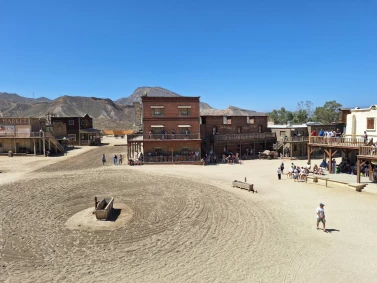
We travelled 1,505 miles in the car from home and back again, including a day trip to Oasys Mini Hollywood, which is well worth a visit and good value for money. This is where spaghetti westerns such as “A Fist Full of Dollars”, “For a Few Dollars More”, “The Good, the Bad and the Ugly”, and “Indiana Jones and the Last Crusade” were filmed, to name a few.
Talking of “The Good, the Bad and the Ugly” ... here’s a detailed account of our experiences using public charging during our trip, starting in Portsmouth:
Public Charging
- We drove 94 miles from North West Oxfordshire to the All Saints Car Park in Church Street, Portsmouth. There were 3x 50kW Mer chargers in the car park, and you don’t have to pay for parking if your car is on charge. This was a good start to the journey as it was as simple to use the Mer chargers as it is to use the Tesla Superchargers that are open-to-all. While the car was charging we had a 5 minute or so walk to the local shopping area for a coffee. We arrived with a charge level of 67%, and left with 100%. There was one other car charging when we arrived. Charge time was approximately 1 hour. I fully charged the car so that we could make good time after leaving Bilbao. One thing to note is that all the Mer chargers are being migrated to the Be.EV network, which I hope will continue to be easy to use.
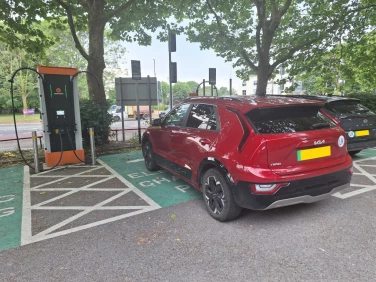
- Our first stop in Spain was at Avenida Pedernales at Villagonzalo for a coffee break where we charged from 46% to 81%. There were 6x 180kW Iberdrola / BP Pulse chargers, and 2x 350kW Porsche chargers. No-one was using any of the chargers. As my maximum charge rate is 80kW, I ignored the Porsche chargers which were more expensive. This is where we encountered our first problem. The sun was so bright, and the charger screen was so dim that it was basically impossible to read the instructions. I went into the restaurant and asked one of the staff for help. This must be a common problem there as he seemed to know where to press on the touchscreen in the correct place to get things working. Unfortunately I had to ask for help a second time as we couldn’t see how to stop the charge.
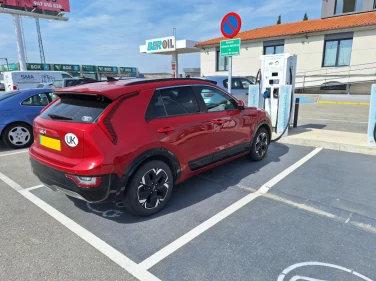
- The next stop was at Rest. El Lagar de Milagros for lunch where there were 3x Wenea chargers. Very simple to use, and there was no-one at the chargers. No problems here. Arrived with 58% and left with 95%.
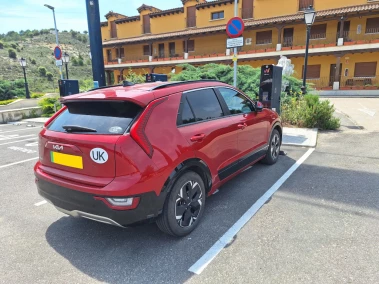
- Our second problem was at Cred. Venturada MD A1 PK 49 28729. This is a Repsol garage where my Shell Recharge RFID card didn’t work, or my credit card. There was another EV charging there, and the owner said to use the Waylet app, which I’d never heard of. After downloading the app, things progressed smoothly and we charged from 70% to 81%. This was just a short stop for a toilet break.
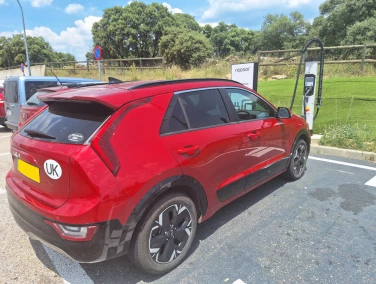
- As usual, the Tesla chargers at Saelices were a breeze using the app. It knows your location, so no searching required. Select the stall number and plug in. If only all chargers were that simple use. In fact, we could have done the whole trip using only Tesla Superchargers, but where’s the fun in that? I purposely selected stops with chargers from different companies to gain more experience with public charging. This was our tea break stop. We arrived with 40% and left with 73%. There were 12x V4 Superchargers here, and some from Ionity. One EV was charging when we arrived.
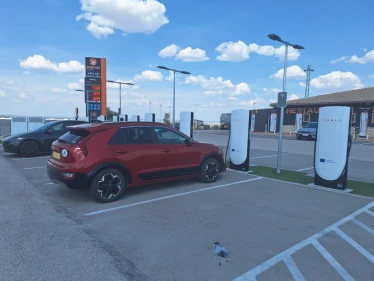
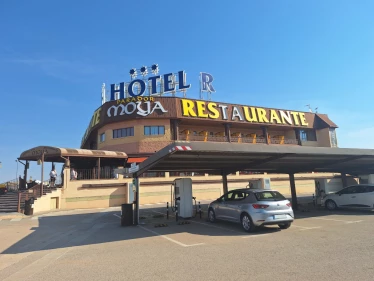
- The next stop was at the Moya Hotel in Honrubia where we stayed the night. There were 8x 240kW Place to Plug chargers onsite, and none were in use. Very easy to use via the app. Arrived with 56% and left the next morning with 100%. I had to move the car away from the chargers when finished, otherwise it costs €60.00 per hour if you don’t move it within 10 minutes.
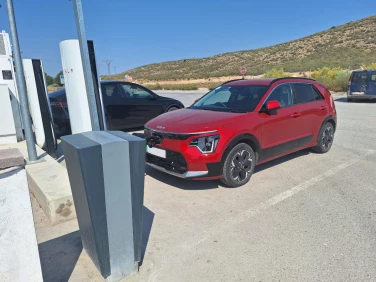
- The next morning we were on the second leg of the journey down south. Again, no problems at the Tesla chargers (4x V4) at Hellin. Charged from 61% to 84% while we had a coffee break. One EV was charging when we arrived.
- At Diseminado Labor Bajo 30850 there were 10x Plenitude on the Road chargers. I was keen to try these chargers, as I’d never heard of them before, and I already had the app installed and set up. None of the chargers were occupied, and we soon found out why. At first it looks like these were going to work like the Teslas, but I was very wrong. The app asked which charger we were going to use, but none of them had any identification. I tried guessing the charger number, and the one to the left clicked. After moving to that charger and plugging in, nothing happened. Eventually, after wasting around 30 minutes, we gave up and headed for some Tesla chargers at Totana, Yet again, simple to use. The only issue was that the two restaurants nearby were closed as it was a Sunday, and we had to resort to one of the worst ham and cheese plastic sandwiches we’ve ever eaten from the nearby garage. At least we managed to charge from 52% to 80%.
I was so annoyed with the Plenitude on the Road chargers that I forgot to take a photo.
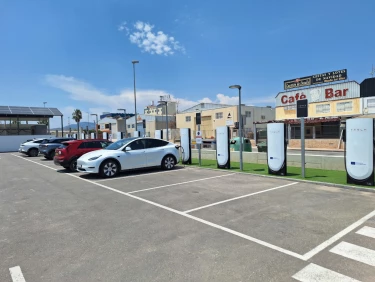
- Our next stop was at our hotel where we stayed for 11 nights.
- While staying at our hotel we took a day trip to Oasys Mini Hollywood. Before heading off we charged at the nearby Total Energies chargers located behind the local supermarket. There were 4x 50kW chargers where we charged from 48% to 81%. Very simple to use via the Charge Europe app, and none were in use when we arrived.
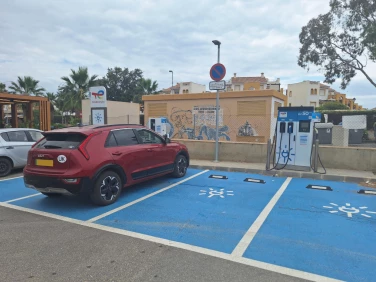
- At the end of our 11-night stay we charged the day before at the Total Energies site. We arrived with 30%, and after about 55 minutes of exploring the Chinese shop (with everything you could possible think of in the store) and a quick trip around the supermarket followed by a coffee, the Kia app suddenly announced that charging was complete, having only reached 83%! What appears to have happened is that the charger I was plugged in to had failed. I couldn’t get it to restart, so moved to the charger next door, and charging continued to 100%. No-one else used the chargers in the whole time we were there.
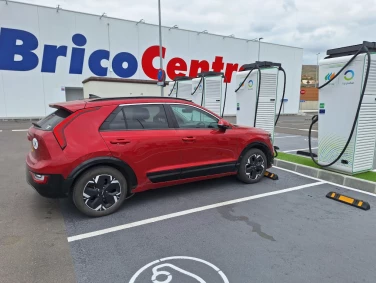
- Our first stop on the way back to Bilbao was at Parque Commercial y Los Olivos Cieza. We stopped there for a coffee break. There were several Iberdrola chargers there (I forget how many). The first charger I tried would not accept my credit card. Given the problem we had with the previous Iberdrola chargers I wasn’t very impressed at this stage. I tried the charger next door, and that worked. But ... when it came to stop the charge, it wouldn’t recognise my credit card that I’d used to initiate the charge. At this point the charge level had reached 92%, and the only way to stop it was to set the maximum DC charge level to 90% in the Kia infotainment system. This caused the charging to halt. I did try stopping the charge directly in the Kia app, but that failed to do anything. At least we had two very delicious coffees and a croissant de chocolate blanco at a cafe in the main square.
- Our second stop on the way back to Bilbao was at Exit La Gineta near Albacete for lunch. 8x V4 Tesla chargers with two in use. Arrived with 54% and left with 82%. So far, just loving these Tesla chargers. Why can’t they all work like that?
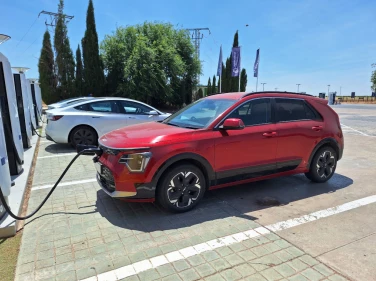
- We stopped again at Saelices for a tea break and used the excellent Tesla V4 chargers there. Three chargers out of 12 were in use when we arrived with 47%, and left with 81%.
- The Sercotel AB Arganda hotel was our next stop for a 1-night stay. Arrived with 62%. No charging was required during this stop.
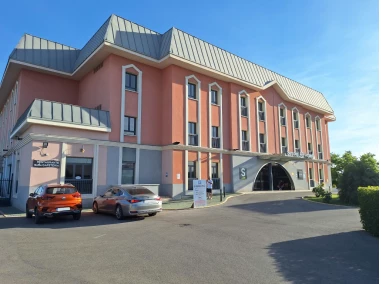
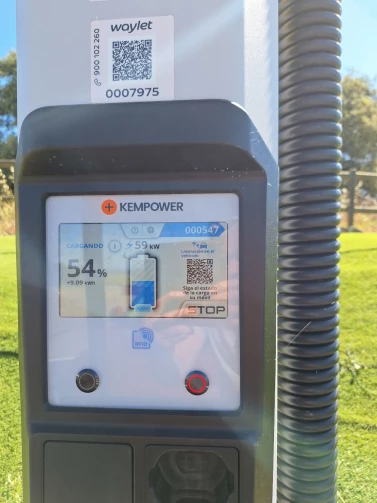
- The next morning we stopped for a coffee break at Cred Venturada (as in step 4). This time, however, we had the Waylet app already loaded and knew how to use these chargers. No chargers were in use. Arrived with 41% and left with 82%.
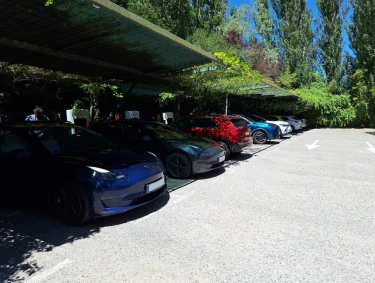
- Lunch was next at the Hotel Landa in Burgos. This was a very posh hotel with 8x Tesla V3 chargers. Usually the V3 superchargers have very short charging cables which are designed for Tesla EVs with their charging ports on the nearside (UK). Some other EVs with their charging port of the other side have to use two parking spaces for the cable to reach. The Kia Niro EV has its charging port at the front in the centre, but even so you have to park at a slight angle and get really close to the charger. However, at this particular site the charging leads were much longer than usual. Not only that, but there were two charging leads. One CCS, and the other Tesla proprietary. I’ve never seen that combination before. The amazing thing with these chargers was that the Kia achieved a charge speed of 84kW, when its published maximum is supposed to 80kW! We arrived with 29% and left with 100%.
- Eventually we reached our final hotel for a 1-night stay. This was the Ibis hotel at Barakaldo, only a short drive away from the ferry port. I was also surprised to discover 4x PowerDot chargers in the car park behind the hotel. We arrived with 59% and charged to 82%. Another one to add to the simple-to-use list. Unfortunately I forgot to take a photo. Also, a short walk from the Ibis was a huge shopping mall where we had a excellent meal at a Texas barbeque restaurant.
- The next morning we had a very good breakfast in the Ibis (included in the booking) and headed off to Bilbao ferry port where we arrived with 80% charge.
- After 1-night on the ferry we arrived in Portsmouth. Leaving the ship and passing through Customs was relatively easy with minimal delay. We arrived home with 44% charge remaining, and not once did we suffer from range anxiety.
Conclusion
The Kia Niro was faultless throughout the whole trip. There were long sections of the motorway (autopista) where the speed limit was 120 km/h (75 mph) and we made good use of the adaptive cruise control. On arrival home I used my OBD2 reader with the Car Scanner app to see exactly how many kWh had been added using public chargers. The answer was 369 kWh. It was then easy to calculate the Kia Niro’s efficiency during the trip through Spain as 3.57 m/kWh, which was pretty good considering that a lot of the journey was at a constant 75 mph. Overall we spent approximately £201.47 on public charging after our calculations.