



Blog

My Green Tech Journey
  • July 21, 2025
  • 9 replies
  • 140 views
My Green Tech Journey
Forum|alt.badge.img+3

My house is a 1930s solid 9-inch brick-built 4-bedroom house with at least two rounds of more modern extensions. It had a condensing gas boiler installed in 2013. The house was always cold except in the very height of summer. 


I have always been green tech curious and played with various DIY solar and battery storage projects all completed as cheaply as possible. We also had a dream that some day we would have an eclectic household and get rid of the gas supply.


So, where to start on the journey? It wasn’t planned, but some grant funding meant we started with EWI (External Wall Insulation) in March 2023. This was only applicable to the oldest part of the house. The outcome was that we could light the log burner for fewer days during winter, and the gas bill was marginally reduced. Not a huge change.


Next was the Air Source Heat Pump. The truth is that my wife and I were getting older (60s) and struggling more and more with the cold house and were unwilling to spend a small fortune on gas each winter. We had various heat loss surveys completed and were recommended a 12Kw heat pump for which we would need planning permission. I applied for planning permission and was totally shocked to have it rejected, on noise grounds, despite living on a busy main road and the flight path for Stansted Airport. Luckily, the planning rules have changed since I had my ASHP installed.


I did some calculations of my own using our gas usage, talked to a friend who has a similar house, and contacted a couple of other installers. The outcome was that a 7Kw unit would suffice for my needs and could be installed under permitted development rules. The installation was completed in November 2024 with 11 radiator upgrades and a new hot water cylinder. It took several days for the house to warm up, but once it was warm, we were very pleased with the outcome.


The heatpump would run 24 hours a day at a low level, keeping the house warm and comfortable. I did light the log burner on about 5-6 occasions on the very coldest days, but this was more psychological than actually needed to keep warm.


So did we save lots of money on reducing our gas bill? No, I can’t say that we did, but the house was far warmer and nicer to live in. If we had used the gas boiler to heat the house to the same extent, it would have cost way more. As it is, I think we have a similar cost for a much more comfortable house.


What next for 2025? Time to ditch my DIY solar PV and battery storage. It had done its time and allowed me to qualify for the maximum power move credit every month.


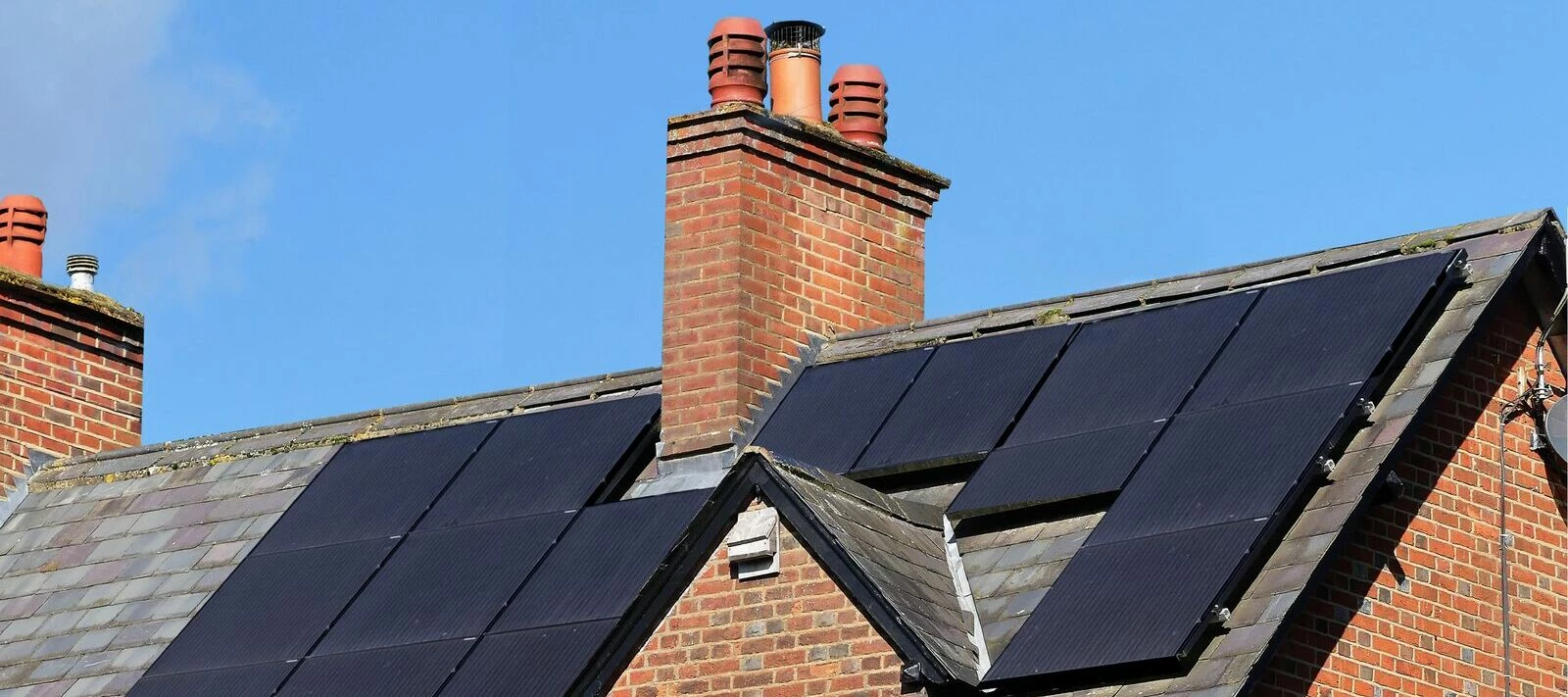
In May 2025, we had a solar PV battery storage, EV charger, and home backup system installed, and since then, we have used almost zero electricity from the grid. In two months, we have also exported over 1.5MWh back to the grid under the Smart Export Guarantee.


Shortly after the PV install, we replaced our very old gas/electric cooker with an induction hob cooker and had the gas meter removed. No more gas standing charge.


Somewhere along the line we also upgraded to an EV. Which has been fantastic. Never going back to ICE.


That is our electric story. Lots of investment, lots of upgrades and savings.


Don’t ask me what the payback time is. I don’t care. No one asks about the payback time on an extension or a holiday or a new kitchen or a new car. Why is this any different from those things.


We do care about cost, but look at return on investment VS having money in the bank. In the bank, you might get 4% return. Solar PV and battery will return far more than that, and the joy of a warm house is invaluable.


Thanks for taking the time to read my story.


Please ask any questions and I will try to answer them.


Regards

Bruce

 

9 replies

BPLightlog
Plan Zero Hero
Forum|alt.badge.img+5
  • Plan Zero Hero
  • July 21, 2025

Congrats on your green journey ​@brichard . It sounds like you’ve made good progress in several areas.

We’ve had solar PV since 2012 and added batteries (I keep adding) around 2019.

This year, after much research, we added an ASHP which is going well but of course, we await a winter to fully compare.

What I wanted to ask was, after your second survey (giving a lower heat loss calculation), did that still enable you to get the government grant towards the cost?

I notice that you mentioned elsewhere about OVO supporting green ‘movers’ where the LCT (low carbon technology) is already in place. This is one area where there needs to be more options - and a key reason why I’m not currently on supply with them (I used to be).


Forum|alt.badge.img+3
  • Author
  • Carbon Cutter*****
  • July 21, 2025

Hi @BPLightlog,

Yes I did get the BUS grant. I found that it was important to find an installer that was flexible and understood the heat loss calculations. Not just a button pusher on a canned heat loss app. My installer was brilliant and totally understood what I wanted. In my experience as long as the installer is on board the BUS grant is not a problem.


Bruce


Forum|alt.badge.img+3
  • Author
  • Carbon Cutter*****
  • July 21, 2025

@BPLightlog can you please vote up my suggestion for incentives  for batteries and load shifting.


here

https://forum.ovoenergy.com/ideas/incentivise-battery-and-load-shifting-by-domestic-customers-19922


BPLightlog
Plan Zero Hero
Forum|alt.badge.img+5
  • Plan Zero Hero
  • July 21, 2025

@BPLightlog can you please vote up my suggestion for incentives  for batteries and load shifting.


here

https://forum.ovoenergy.com/ideas/incentivise-battery-and-load-shifting-by-domestic-customers-19922

Have done Bruce .. it is something similar to options I’ve been trying to get on the table for a while 

Didn’t get much traction then


Peter E
Plan Zero Hero
Forum|alt.badge.img+1
  • Plan Zero Hero
  • July 22, 2025

I wouldn't mind upvoting batteries if there was an incentive to do so. By putting in batteries on a fixed rate tariff then you are smoothing the load, reducing the transmission and distribution losses but you don't get a reduction in transmission and distribution charges which are lumped into to the fixed rate or SVT.


If you have gone to a tracker or half hour rate tariff, with a battery you can reduce the load on the grid at peak times and shift cheaper energy into the peak for you to use then. However, home batteries are excruciatingly expensive for what they are (they are far more expensive per kWh than even EV batteries) and the only motive for buying them is altruism which is fine if you have the money and that is what you want to do with it.


My solution was to keep gas for half of our cooking (2% of our previous gas use) and move as much energy use out of the peak as we can reasonably do. Peak use is currently running at 6.4%.


Peter 


Emmanuelle_OVO
Community Manager
  • Community Manager
  • July 22, 2025

Hey ​@brichard,


This is brilliant, really helpful to other community members. I’ve featured your topic on the ‘Home and Heating’ section of the forum so it’ll appear right at the topic & added an image. 

Looking really great, thanks so much for sharing your experience 😊


Forum|alt.badge.img+3
  • Author
  • Carbon Cutter*****
  • July 22, 2025

Thanks ​@Emmanuelle_OVO and thanks for correcting the title.


Forum|alt.badge.img+3
  • Author
  • Carbon Cutter*****
  • July 22, 2025

Hi  ​@Peter E ,


I understand your perspective, but I would like to work to make it more attractive financially for OVO customers to invest in battery technology. I believe that battery storage is only going to get cheaper. I think Some energy companies offering up to 40p KWh for exporting at peek times. Something like this might help to tip the balance in the decision making process while also contributing to demand shifting.

I hope vehicle to grid is the long term answer, but seems to be moving at a sails pace.


If you think there is any merit in this idea please vote it up for me.


Bruce


Peter E
Plan Zero Hero
Forum|alt.badge.img+1
  • Plan Zero Hero
  • July 22, 2025

Hi Bruce


In researching the economics of solar and battery systems I found that solar has a very good case for being self-financing because of its longevity, the relative lower cost of installation and the fact that it is a producer of power. Batteries on the other hand have a much shorter life, are very expensive for what they are and can only earn their keep by shifting power which is much less lucrative. I think the cost of batteries comes down to demand vs supply. The installation cost (has to be MCS certificated to qualify for a SEG**) has jumped enormously in the last bout of inflation and NI rate increases.


My question is: How do you make it financially attractive to get a battery system? Subsidies? They have to be paid for by everyone but not so much by those who are generating their own power unless it’s general taxation instead of being on power use.


With the West Botley solar farm coming on line at some point, the 840MWp is likely to produce downward pressure on the SEG. More will follow. Where you can score is to export early morning and late afternoon going into the peak where variable SEG rates are likely to rise. Midday there will be a significant and increasing glut where the SEG is likely to fall. Power arbitrage is a possible area where batteries might work.


Unfortunately solar power is deepening the divide between the rich and the poor. The people with cash in the bank can buy solar/battery and cut their power usage thereby sidestepping the ever increasing Net Zero charges being imposed. The people who live from payday to payday will have no such opportunity on the SVT, Fixed Price or PAYG and will have to pay the full amount. And thus it is always the case: The rich get richer ...


Quasar make a new V2G unit. Costs about £6,000 plus installation + DNO approval. Not all distribution areas can support them. Given all the other factors (number of EVs plugged in at the right time with enough charge) I don't think that it will ever make a significant contribution to the peak demand but it could be lucrative if you can do that as you already have the battery.


Peter 


** Octopus don't require an MCS but do want to see what standards it was installed to and the qualifications of the installer