



The Great Data Feed

  • April 4, 2026
  • 9 replies
  • 79 views

BPLightlog
Super User
Forum|alt.badge.img+12

You may have seen some of my posts on data I monitor from energy use and various sensors.

We recently had our water meter changed due to a seized stop tap and now have a new version with a smart meter attached.
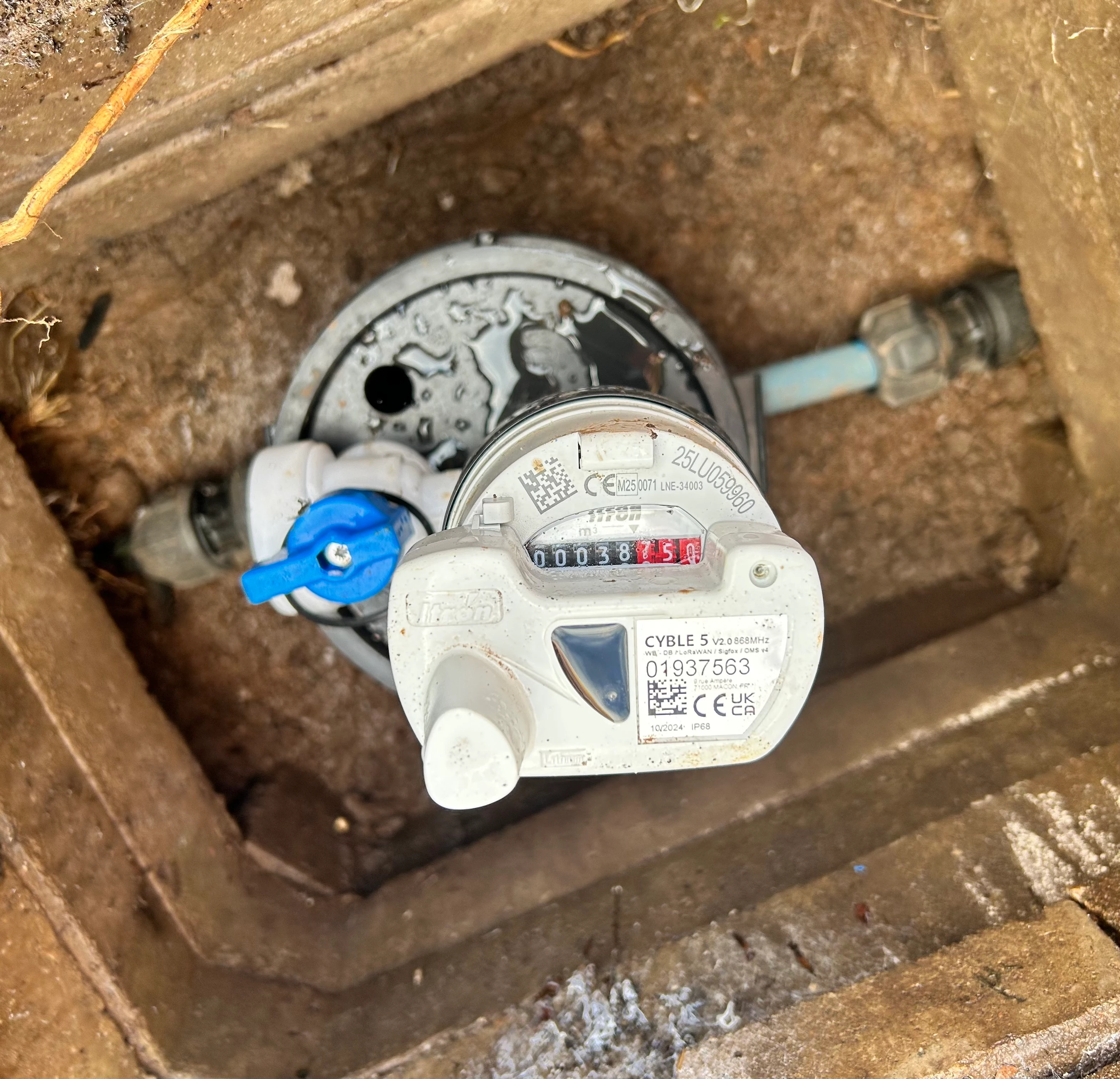
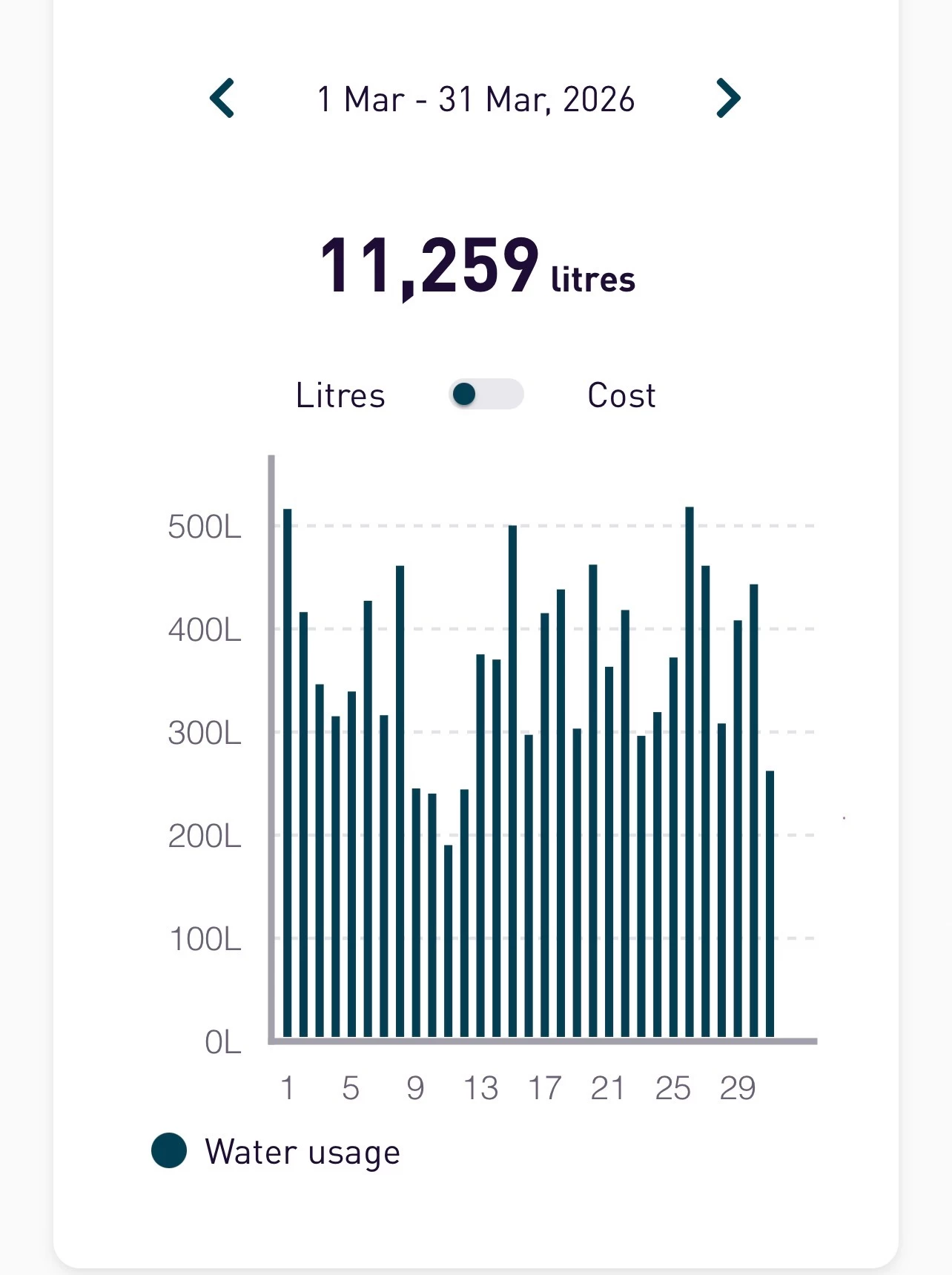
This now allows me to see my water usage, initially via my water supplier and soon hopefully, I can integrate the feed into the rest of my system so that I can monitor, set alarms and generally keep track of everything in one place. 
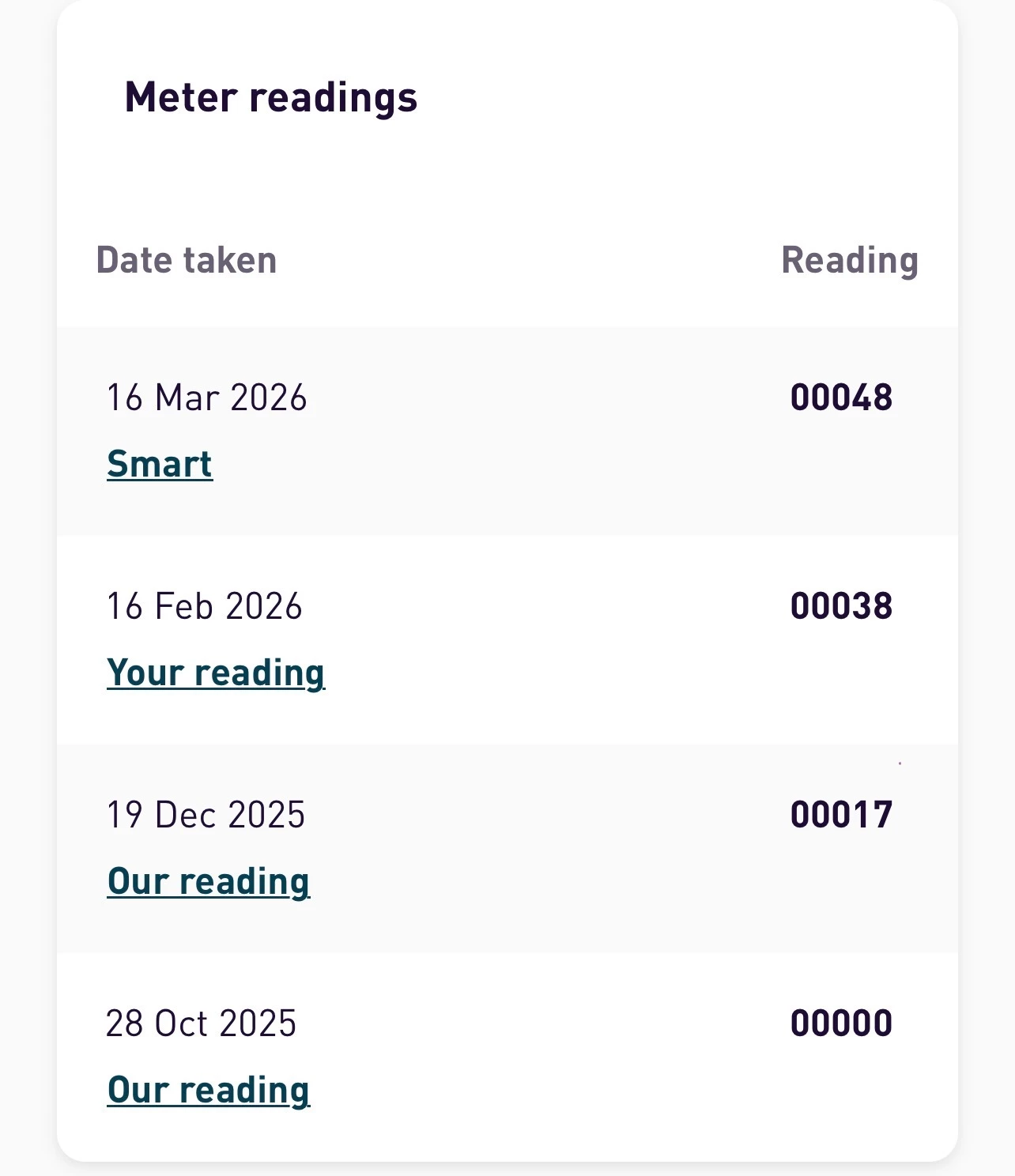

You may ask “why would you want to monitor this?” but I’ve already had experience of noticing a small gas leak when one of the taps on the hob didn’t close properly. The water feed will similarly allow a view on unusual usage, possible leaks and potentially prevent a costly problem with something which was previously mostly unseen.

I wonder what other things might be available to monitor in the future.

9 replies

Forum|alt.badge.img+3
  • Rank 4
  • April 4, 2026

Great use of the new LoraWAN low power radio networks. Has it got a lifetime battery in it? 


BPLightlog
Super User
Forum|alt.badge.img+12
  • Author
  • Super User
  • April 4, 2026

Great use of the new LoraWAN low power radio networks. Has it got a lifetime battery in it? 

I’ve actually no idea. The water company (customer facing) know nothing about it and have no information about its data feed.

From what I understand, much of this type of system is locked to the supplier but I’ve found a potential data grab tool which I can use to scrape the info I want from my water account and follow it in my Home Assistant network. I know there are RF devices I could use but if the feed is already there and there’s no cost, I will just use the info I can easily get to.


Peter E
Super User
Forum|alt.badge.img+9
  • Super User
  • April 4, 2026

@tony1tf I can't see that it can be anything else other than a battery. You wouldn't want a mains connection into a water meter.


You can get very high capacity Zinc Air primary cells that work in this type of application. They are also used in gas meters as far as I can see. As an inherent safety feature they will only deliver a very low current but they will do that for a decade or more. On the railway we used to use 1.5V 40AH batteries the size of the old 6V Lantern battery for signalling track circuits in remote areas with no AC supply. Used to last for a year.


https://en.wikipedia.org/wiki/List_of_battery_sizes


BPLightlog
Super User
Forum|alt.badge.img+12
  • Author
  • Super User
  • April 4, 2026

@tony1tf I can't see that it can be anything else other than a battery. You wouldn't want a mains connection into a water meter.


You can get very high capacity Zinc Air primary cells that work in this type of application. They are also used in gas meters as far as I can see. As an inherent safety feature they will only deliver a very low current but they will do that for a decade or more. On the railway we used to use 1.5V 40AH batteries the size of the old 6V Lantern battery for signalling track circuits in remote areas with no AC supply. Used to last for a year.


https://en.wikipedia.org/wiki/List_of_battery_sizes

From its data sheet, this has a Lithium battery

*I suppose this is what is called a ‘lifetime battery’ (up to 15 years) but our last meter hadn’t been touched for around 60 years


Peter E
Super User
Forum|alt.badge.img+9
  • Super User
  • April 4, 2026

That's good to know. Lithium has high energy density as well. Technology moves on and tends to converge to one solution where manufacturing scale reduces costs and makes the more expensive product obsolete or niche products at a much higher cost. For example where you must use a like-for-like replacement which is a common requirement on the railway and other safety critical industries.


BPLightlog
Super User
Forum|alt.badge.img+12
  • Author
  • Super User
  • April 4, 2026

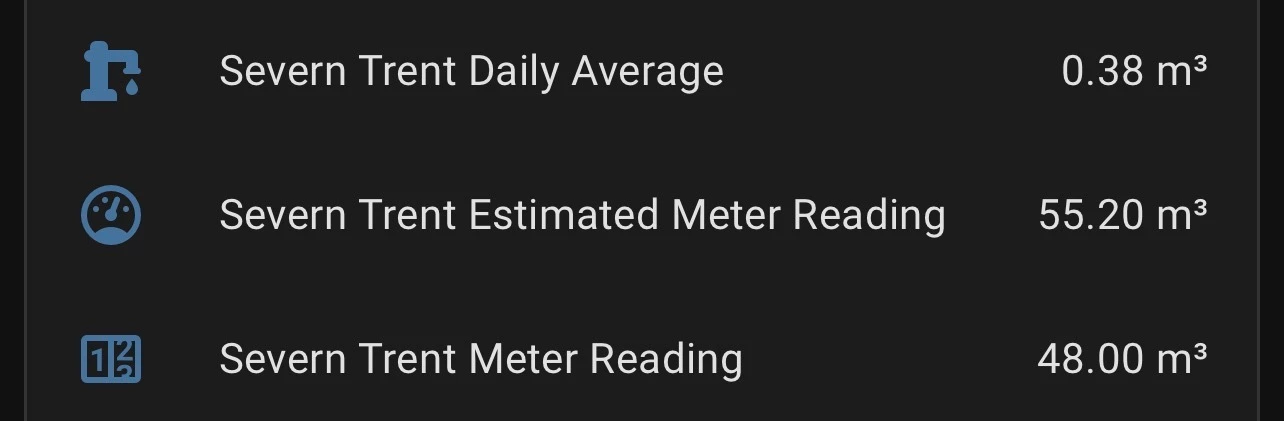
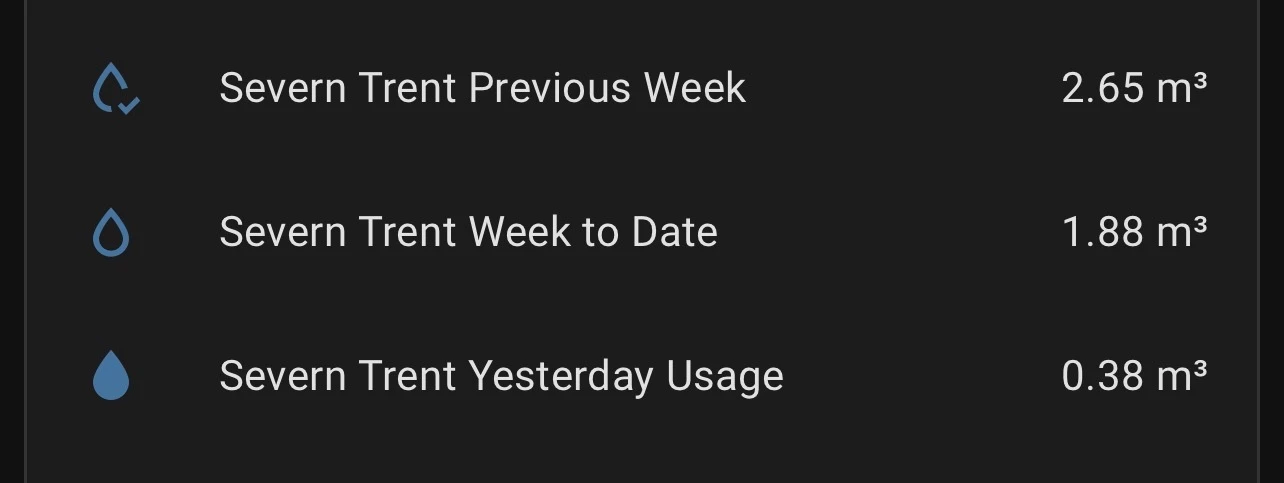
I’ve now actually managed to get some data into HA. Will wait to see how to track/graph it 

It’s very useful how the HA community share their coding 


Firedog
Super User
Forum|alt.badge.img+7
  • Super User
  • April 4, 2026

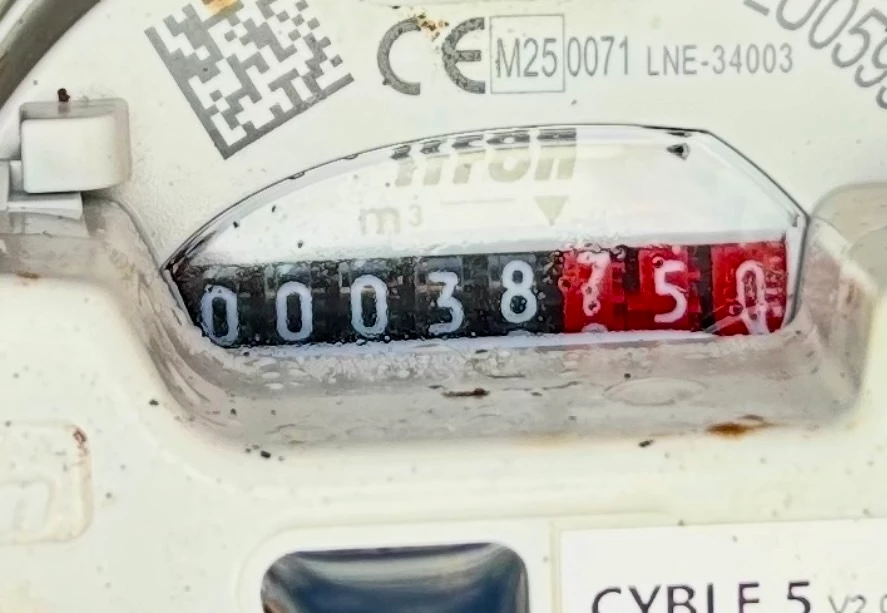
I can’t help noticing that, while your supplier only displays consumption to the nearest 1000 l, the API you’re accessing via HA displays it to the nearest 10 l. Does the meter itself show anything - one click per l, perhaps?

It’s just the same sort of ‘dumbing down’ that infuriates me with what OVO choose to display on the account website: readings to the nearest 1000 Wh, usage to the nearest 10 Wh. Even the meter itself is configured to show readings only in whole kWh.

Anglian Water are as bad as Severn Trent, so I wonder if your favoured energy suppliers  are as well. Why the heck aren’t data displayed with the precision available?

[Just as an example, I sometimes see several days in a row with identical recorded meter readings. Does this mean that there’s been no consumption? Of course not! Just that the total consumption for those days was less than 1 kWh. So I couldn’t tell at a glance whether there had been any day-to-day change - say twice as much on Tuesday as on Monday. (I know I can check the usage data, but even that isn’t as precise as it could be, and I wouldn’t have to if the readings were displayed with the precision available.) 

Can either of you think why this ‘dumbing down’ seems to be the norm? 


BPLightlog
Super User
Forum|alt.badge.img+12
  • Author
  • Super User
  • April 5, 2026

The meter itself reads in litres 

.. and actually, so does the api feed - I’d just chosen a default to display to 2 decimal places. 

As the Cyble 5 device is a mechanical to digital/electronic interface, I would guess they don’t record below single litres.

There’s also the point about accuracy below a certain level of data on view.

Additionally, there would be considerations on data storage (although that would be fairly immaterial these days) and then rationale regarding billable data from the supplier perspective. Finally the UI or ‘customer experience’ teams get their hands on presentation and so you end up with a generally usable report for the everyday customer rather than a whole data bank for the explorative types (like you … and me)


Firedog
Super User
Forum|alt.badge.img+7
  • Super User
  • April 5, 2026

The meter itself reads in litres .. and actually, so does the api feed - I’d just chosen a default to display to 2 decimal places. 
  

That’s good to hear. I bet you can’t easily find the same precise data on the Severn Trent website, though.
  

… the UI or ‘customer experience’ teams get their hands on presentation and so you end up with a generally usable report for the everyday customer 
 

I still don’t see why a meter reading of 538 for days on end is more ‘usable’ than readings like

  • 538.050
  • 538.126 (daily usage 76 Wh)
  • 538.375 (daily usage 249 Wh, >three times bigger than yesterday ...)
  • 538.690 (daily usage 315 Wh, 26% bigger than yesterday ...)

… and so on. Spotting changes like that would indeed have me scrabbling around to find the half-hour data to try and work out what’s going on. A few tens or indeed hundreds of Wh don’t perhaps mean much to the ‘typical’ user, but there are lots of us ‘low users’ for whom a sustained increase of this order could have significant financial implications.

UI/UX people have a lot to answer for. I know just how tempting it is to do something for no real reason other than ‘because I can’ (not looking at the architect of the wobbly cards on thread list pages at this site, honest! 😉)